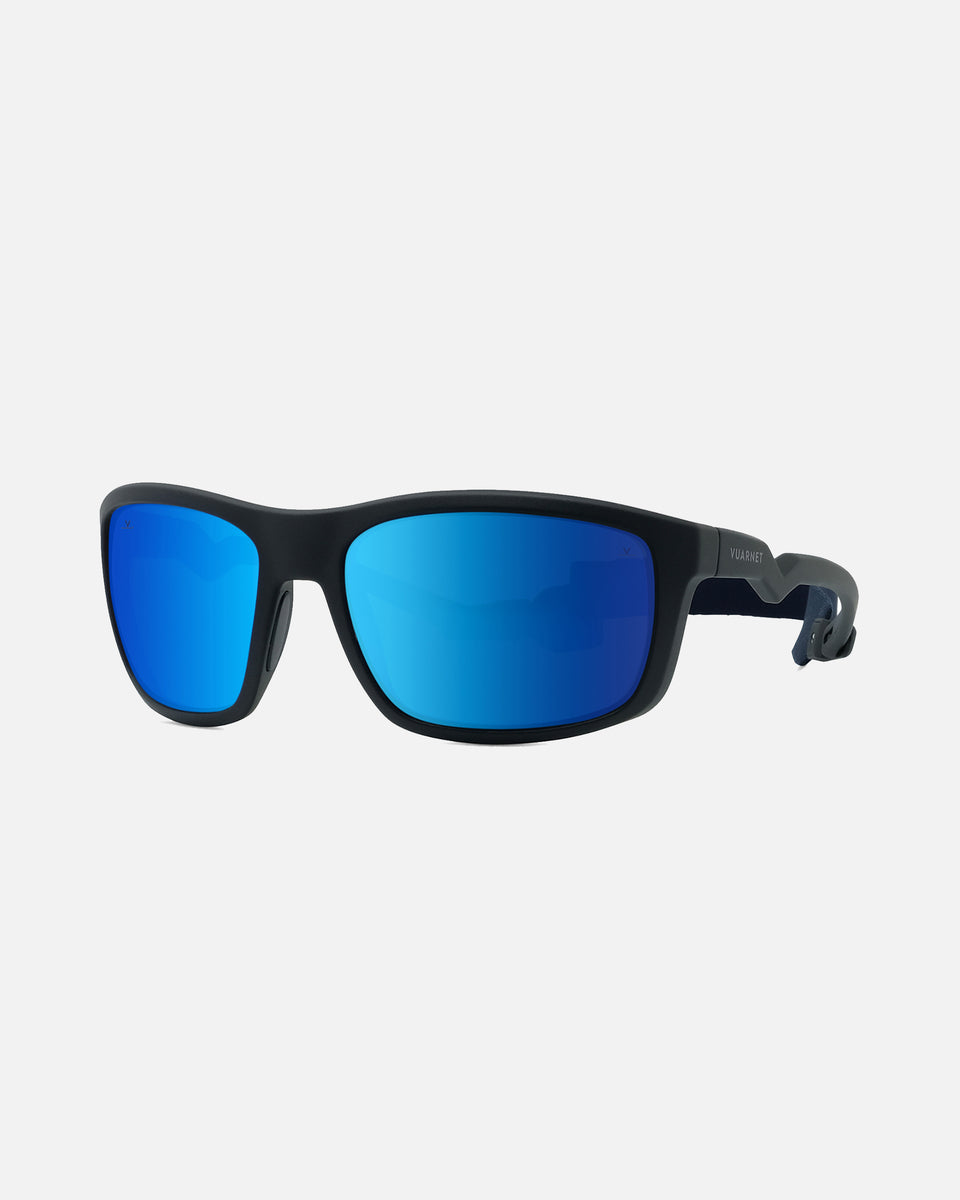
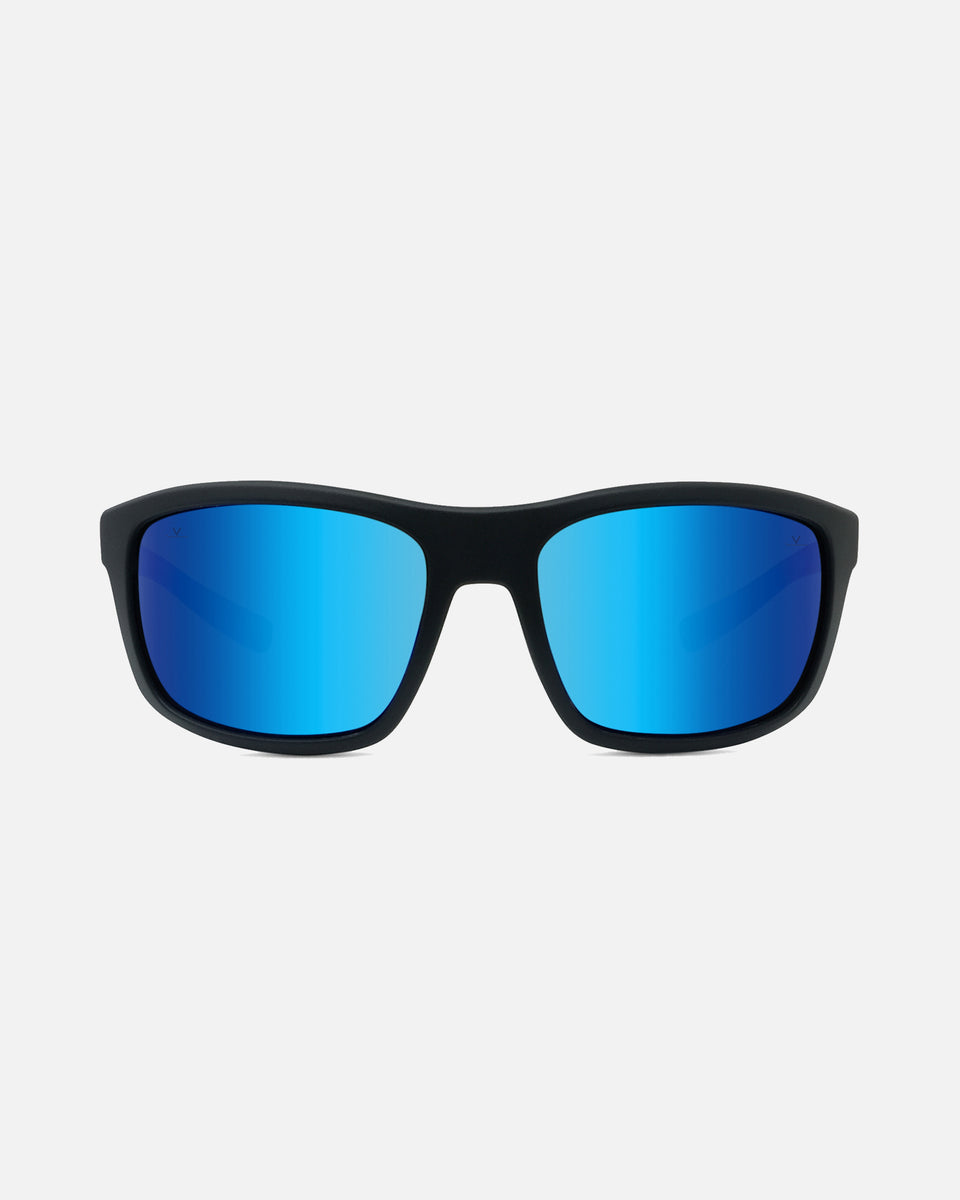
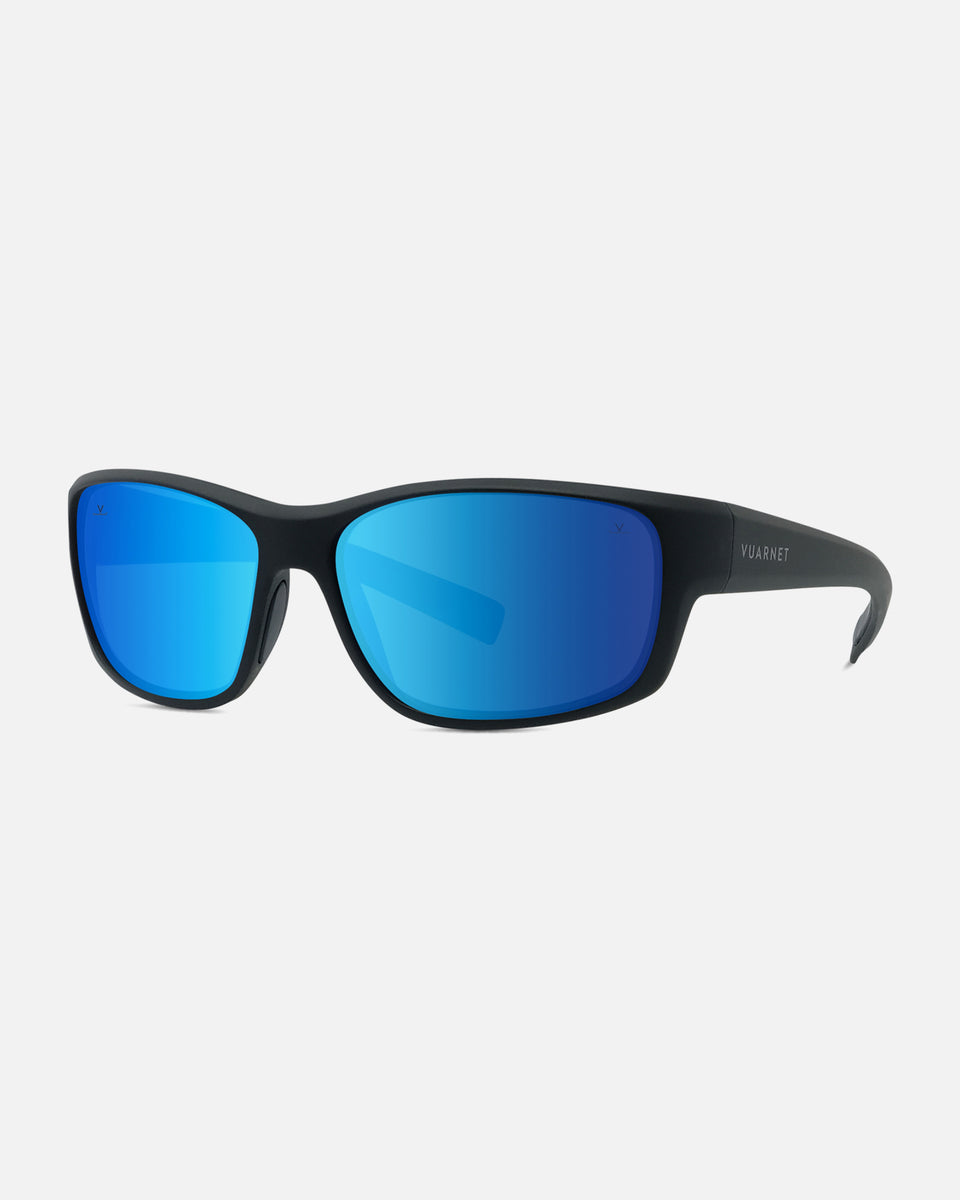
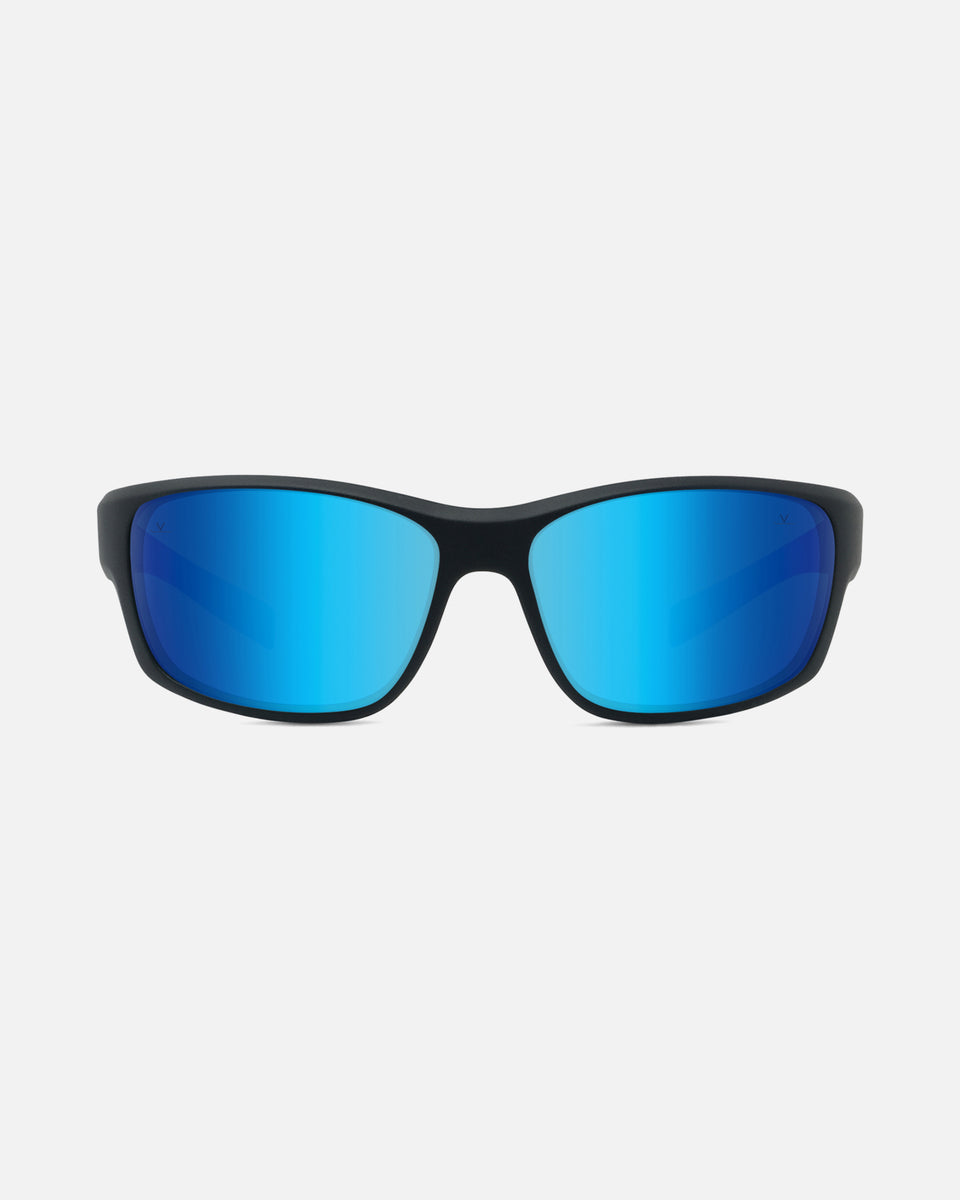
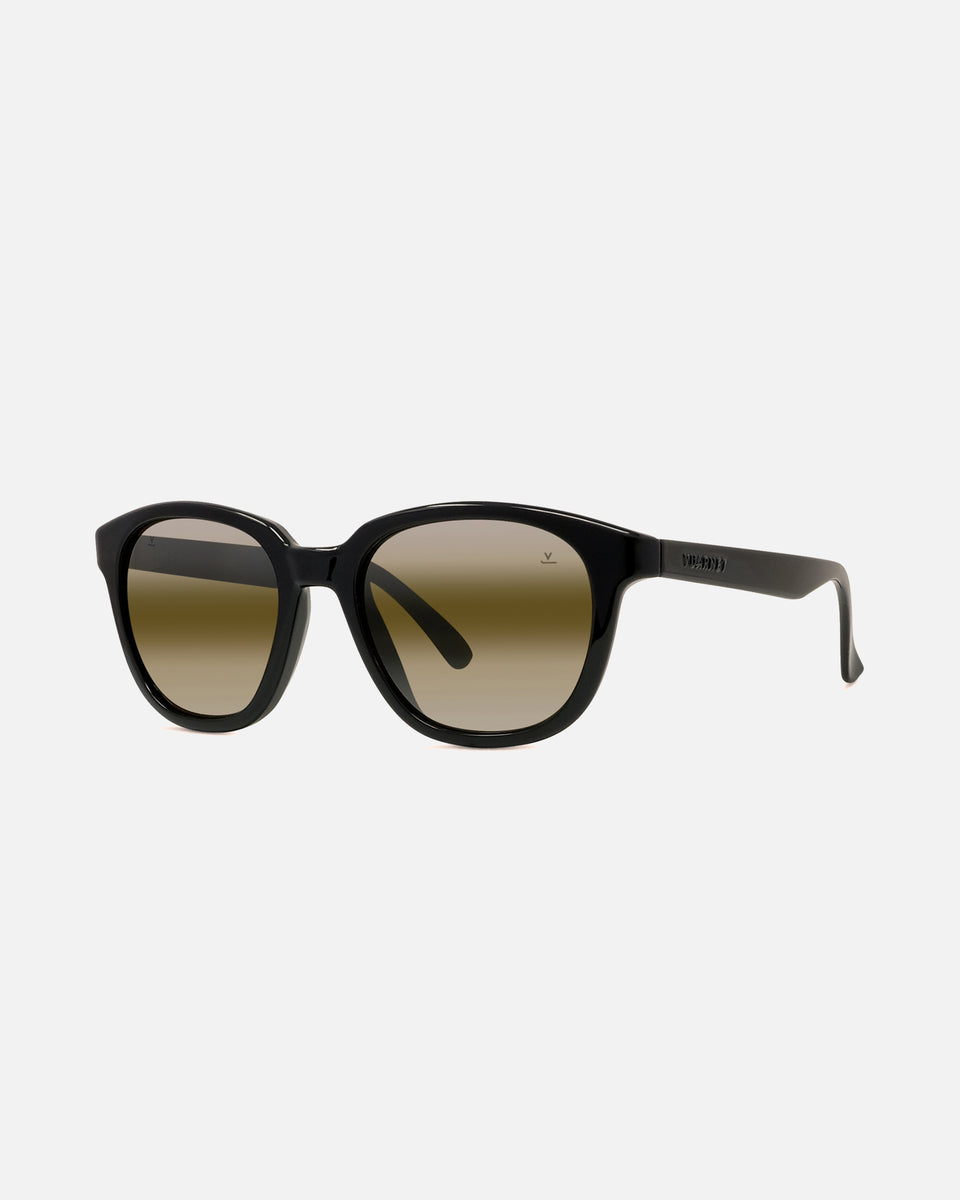
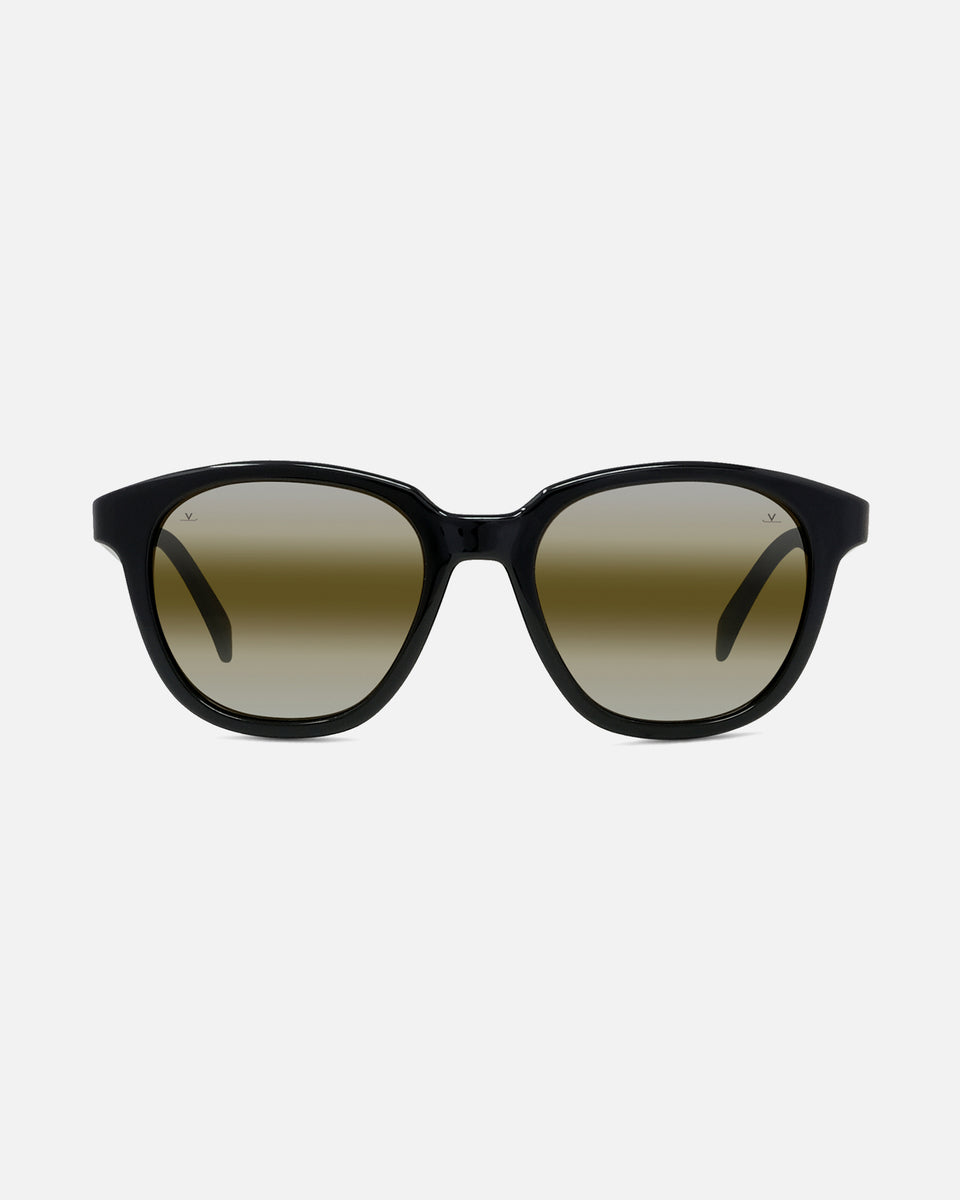
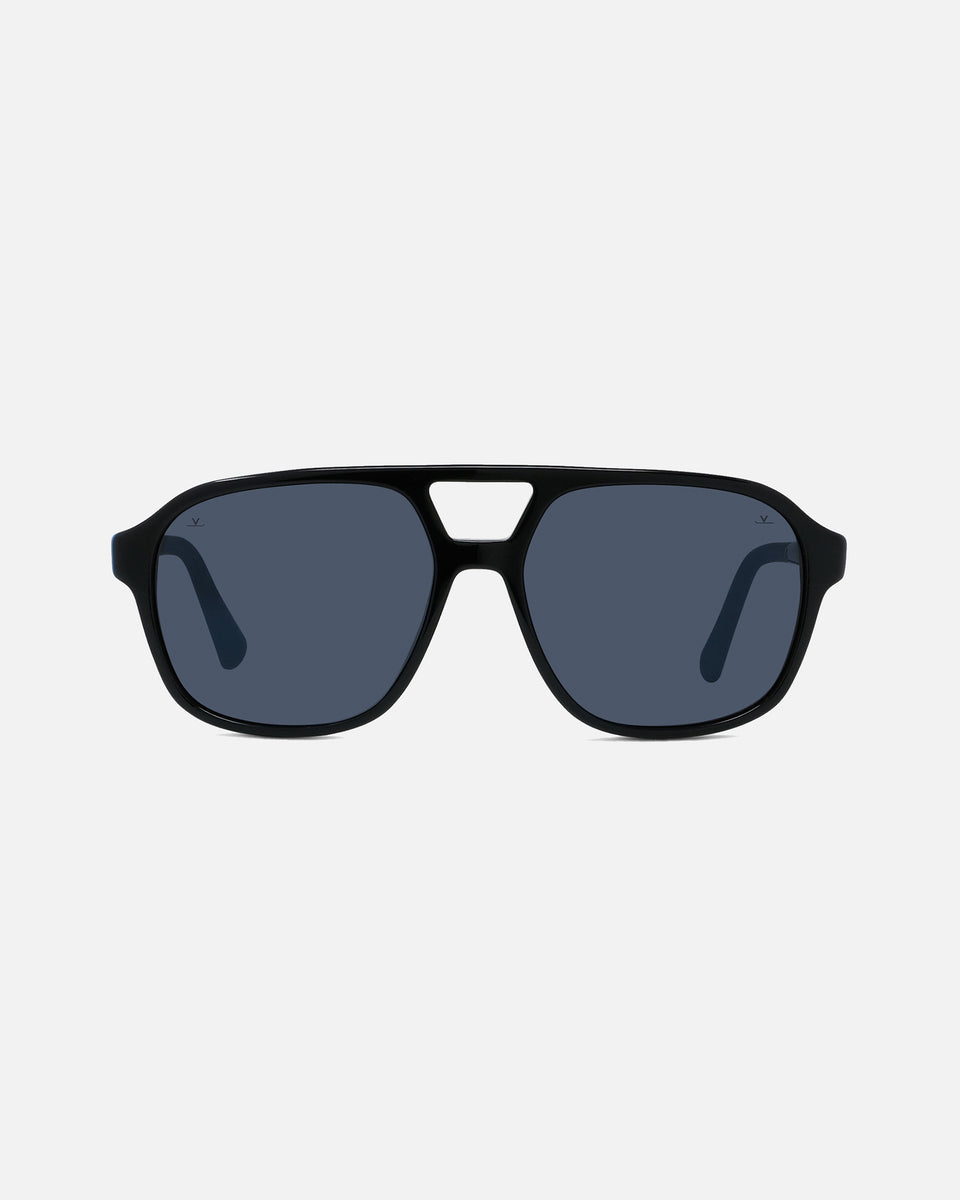
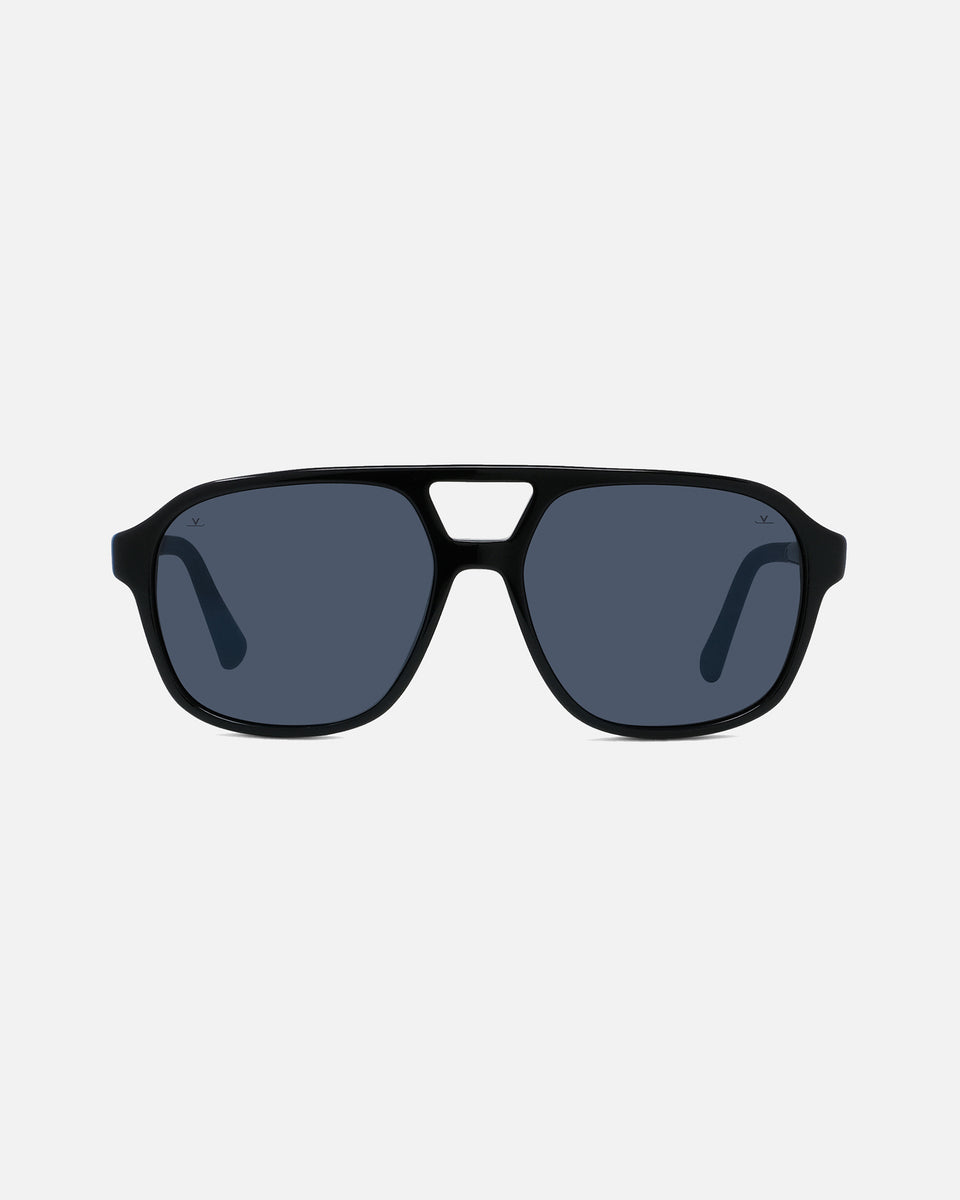
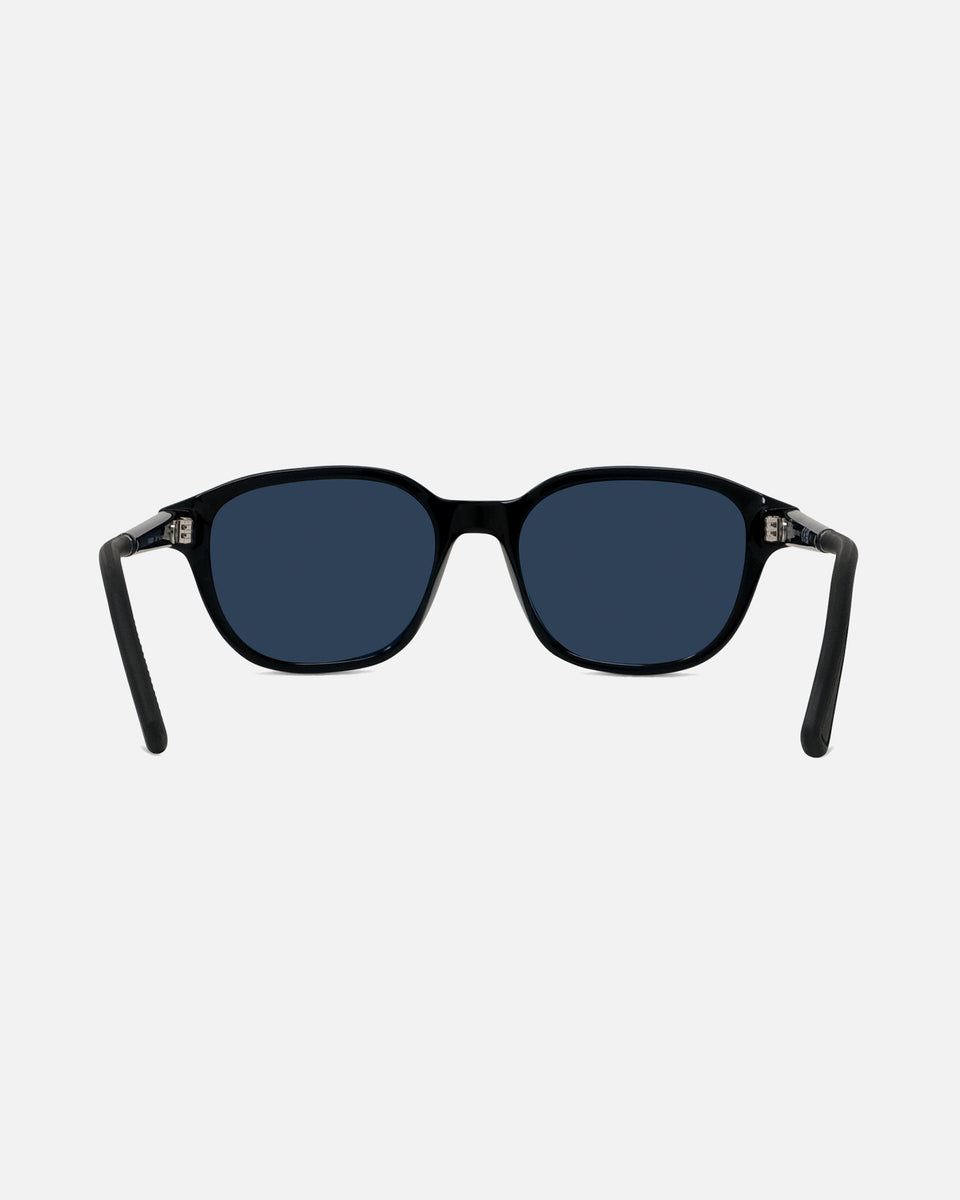
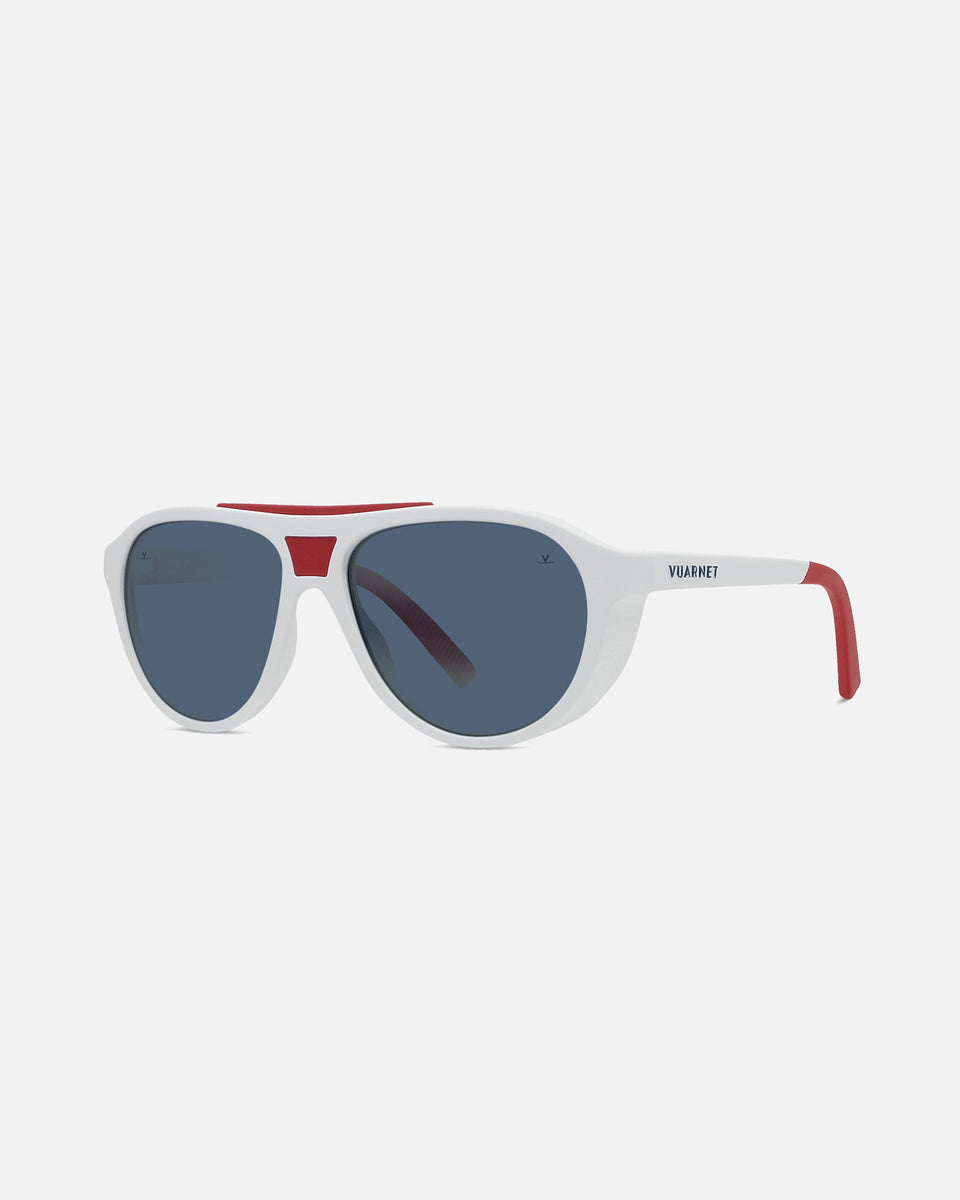
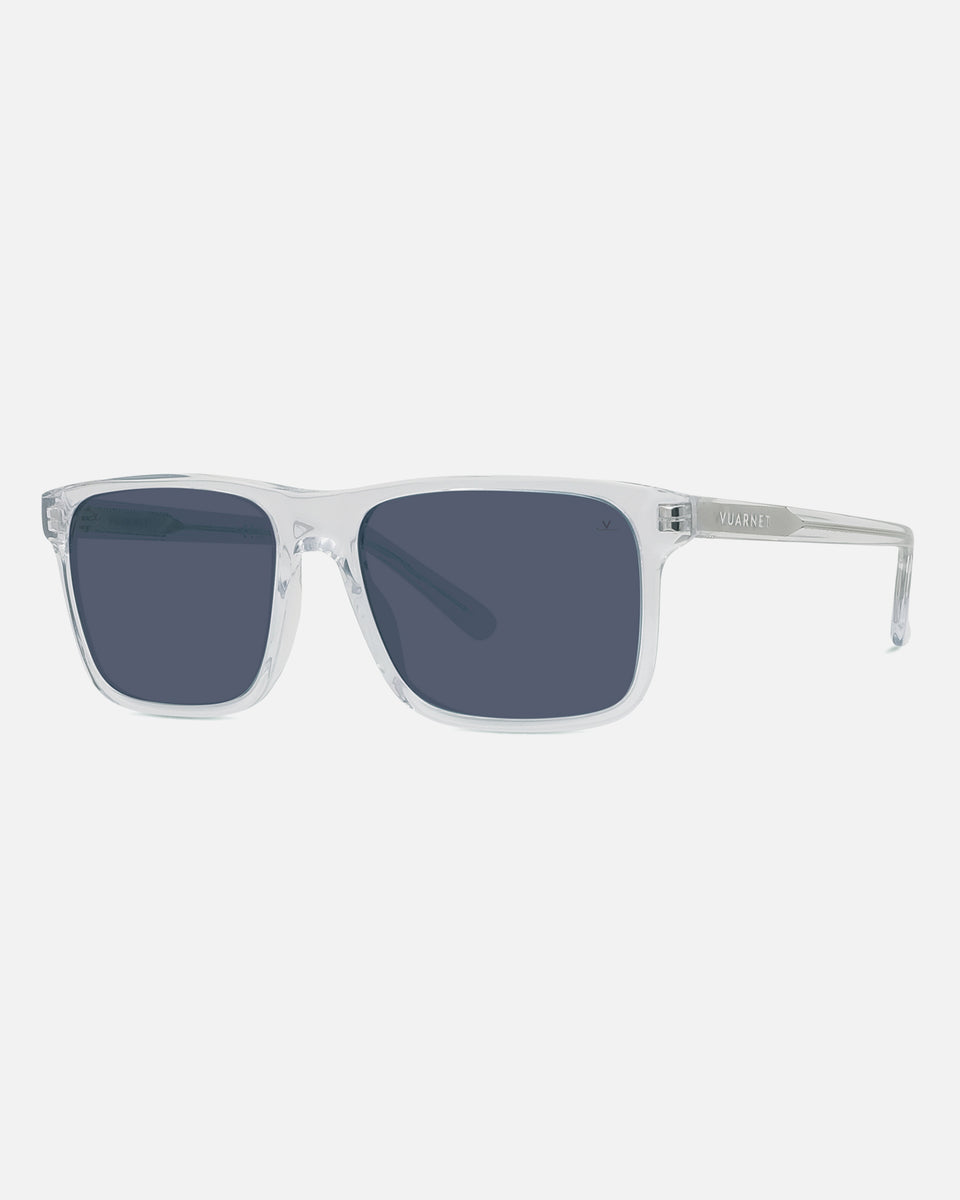
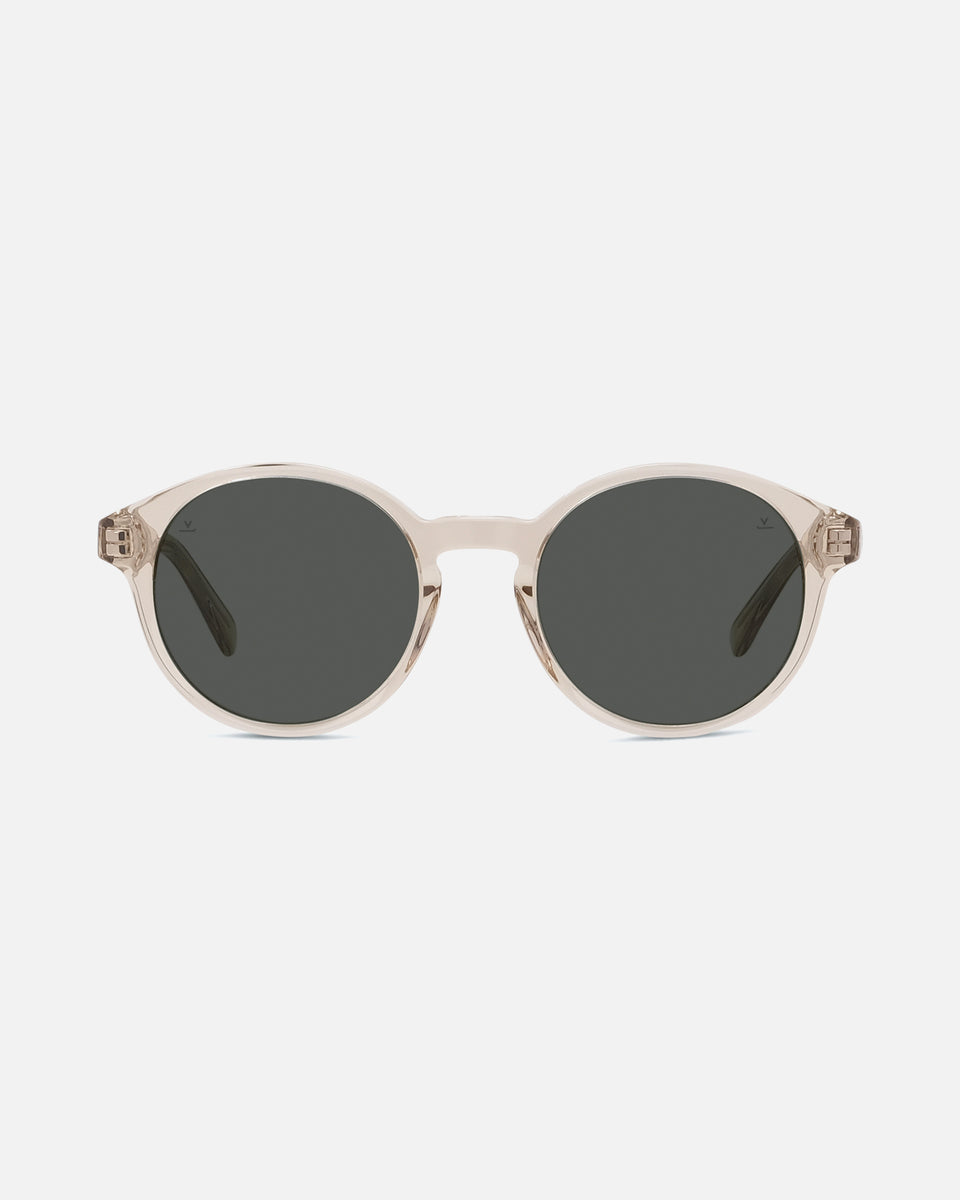
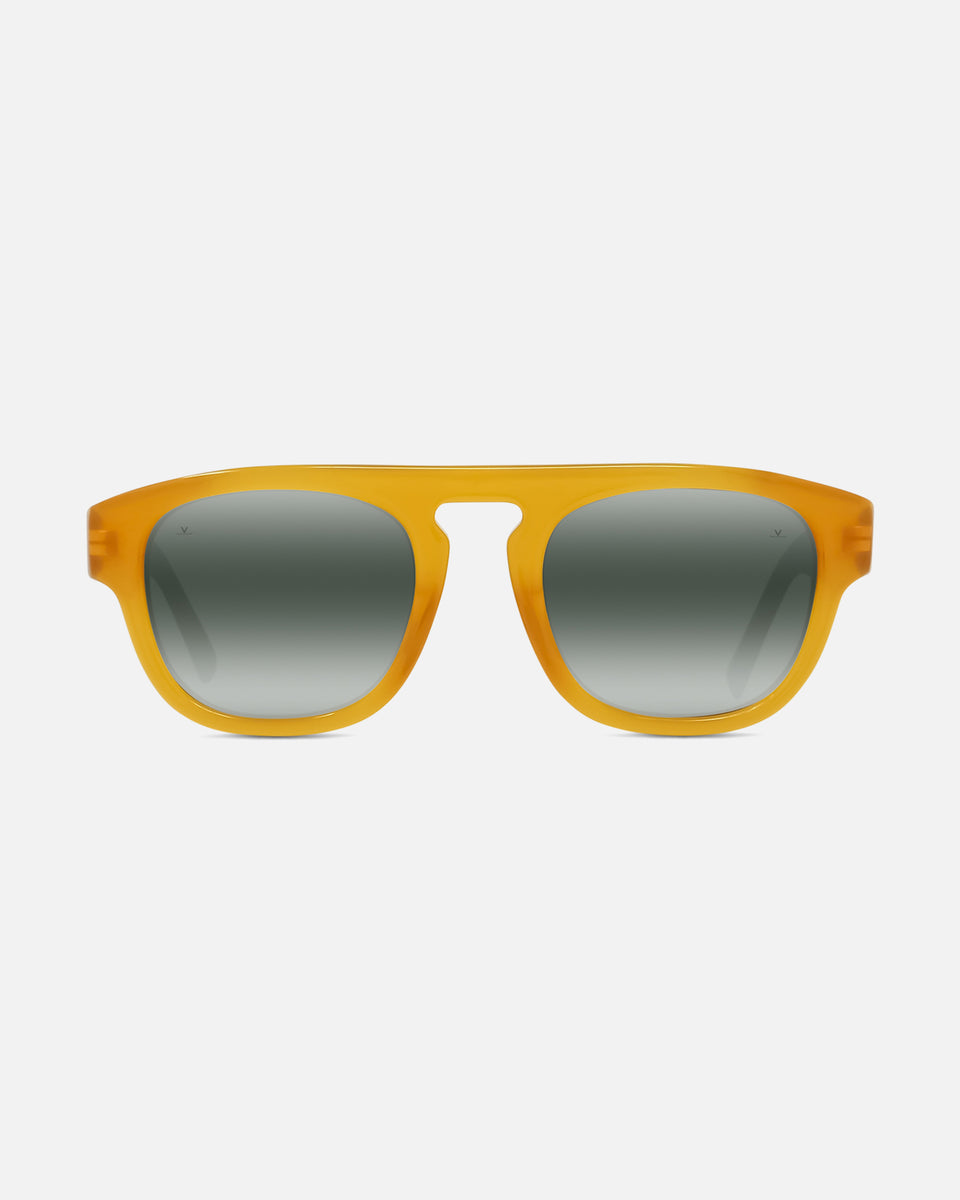
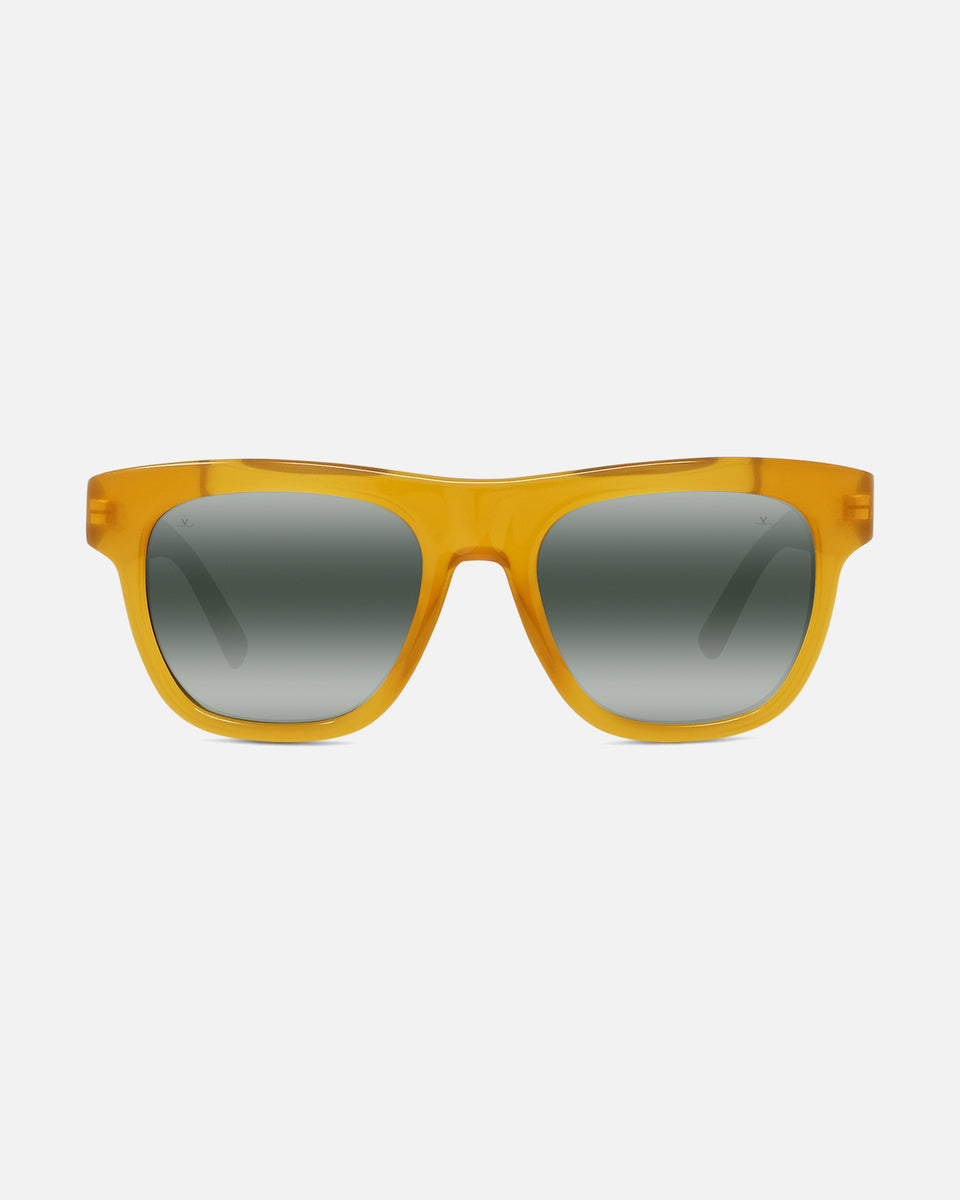
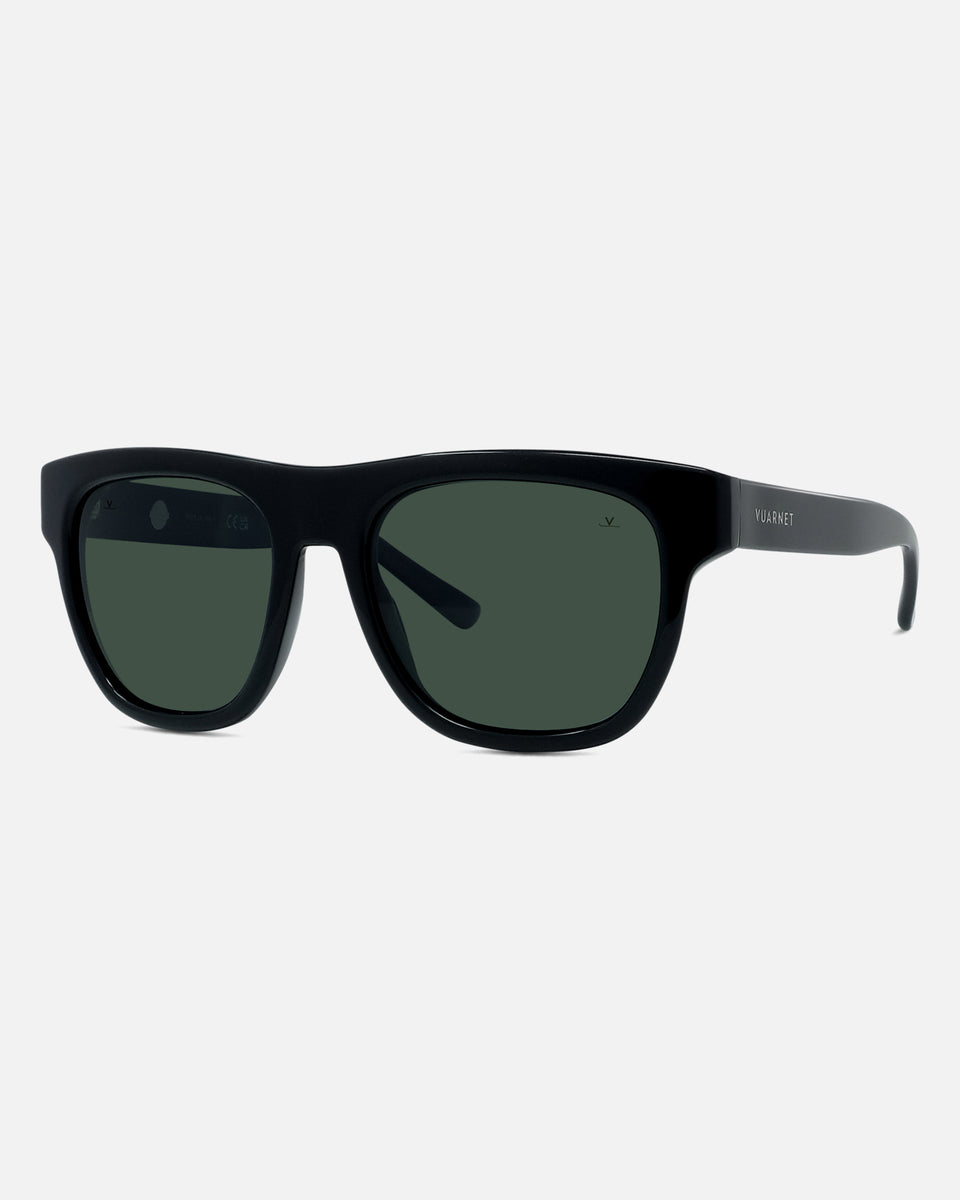
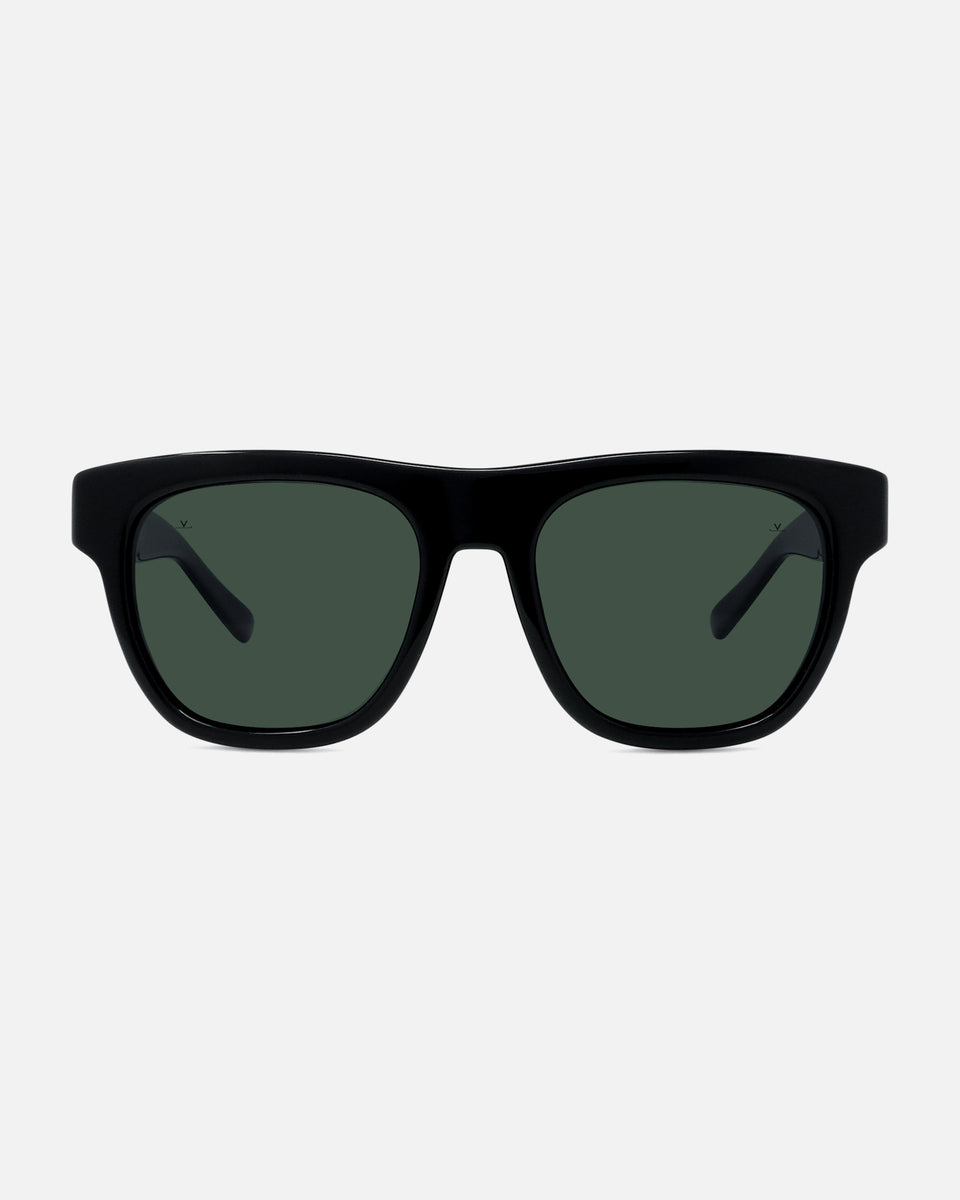
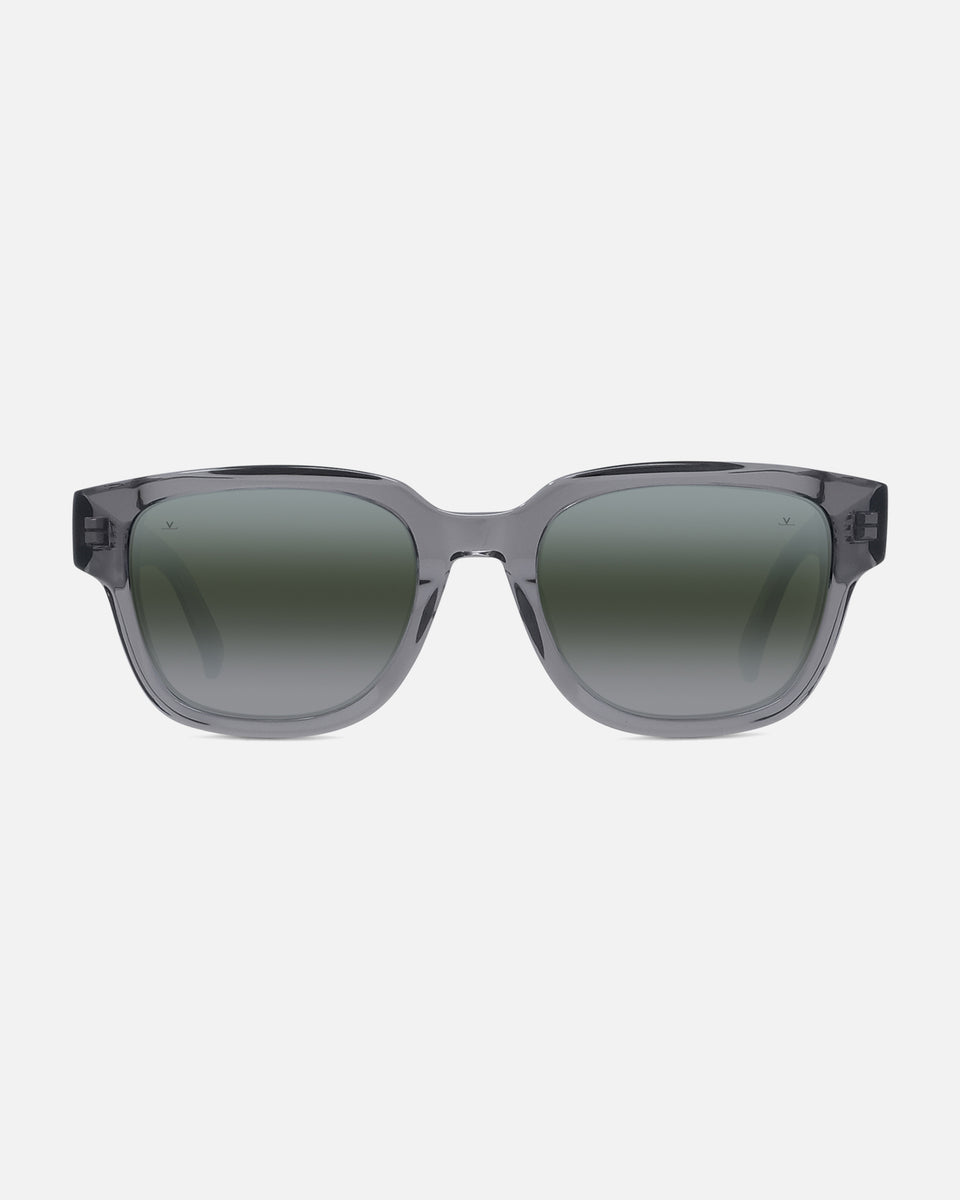
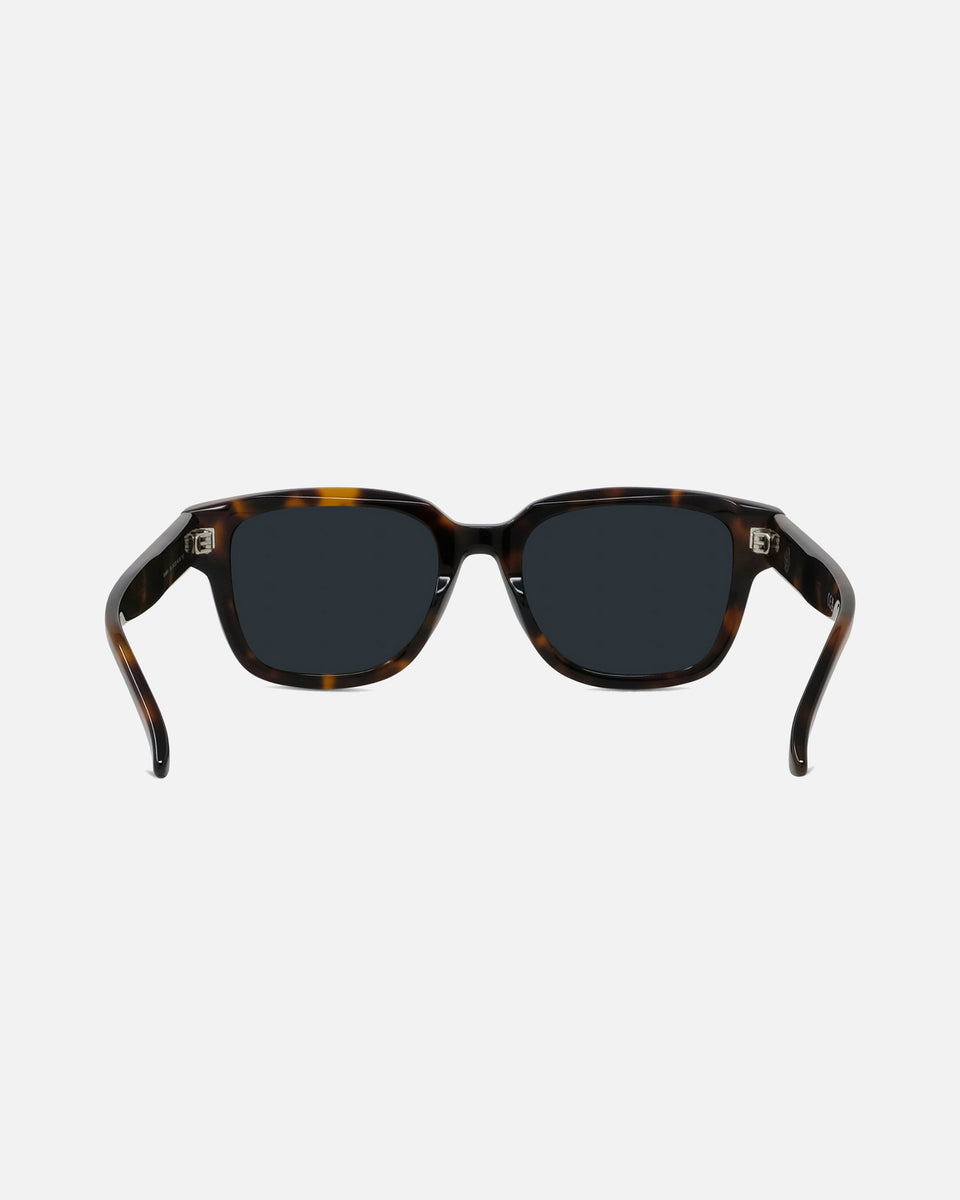
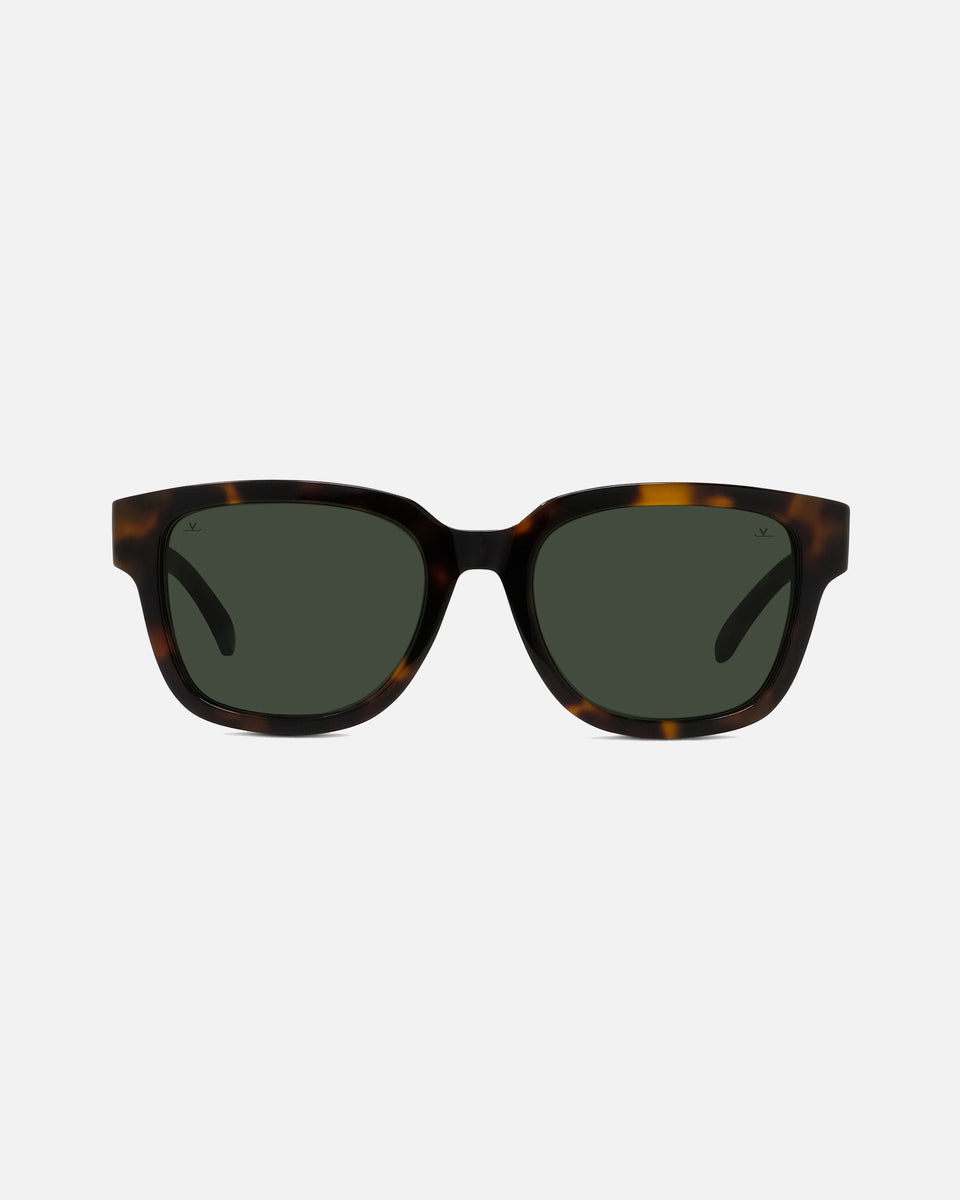
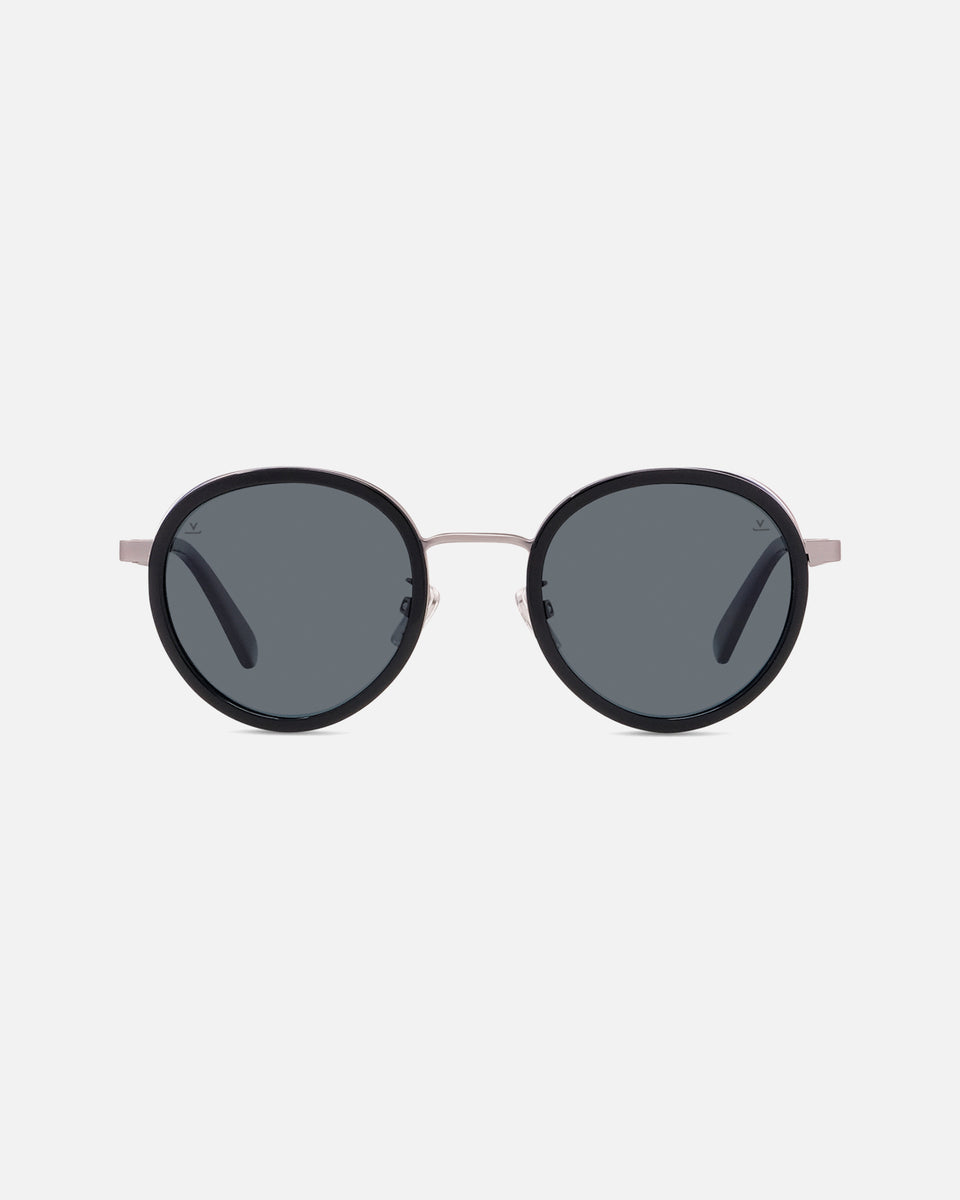
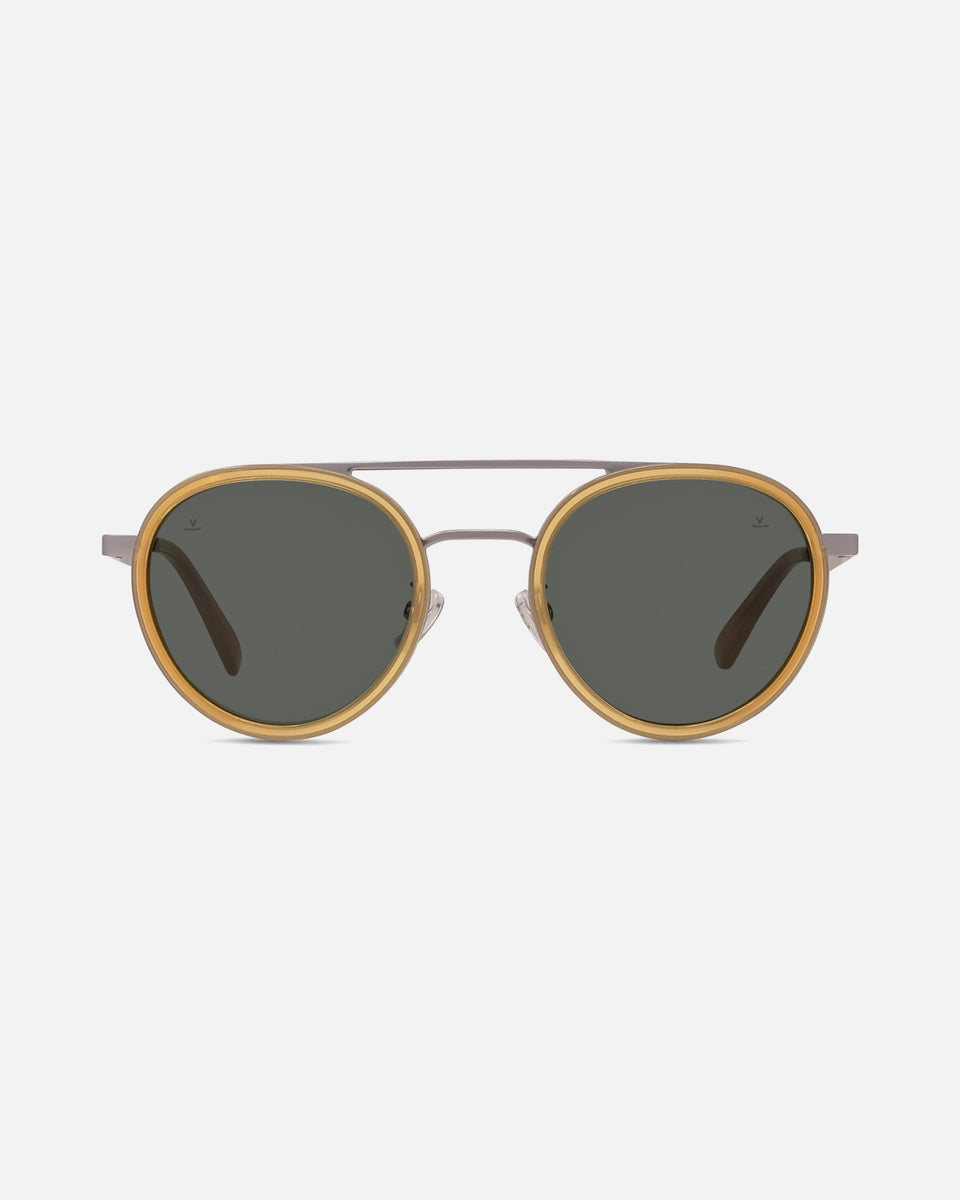
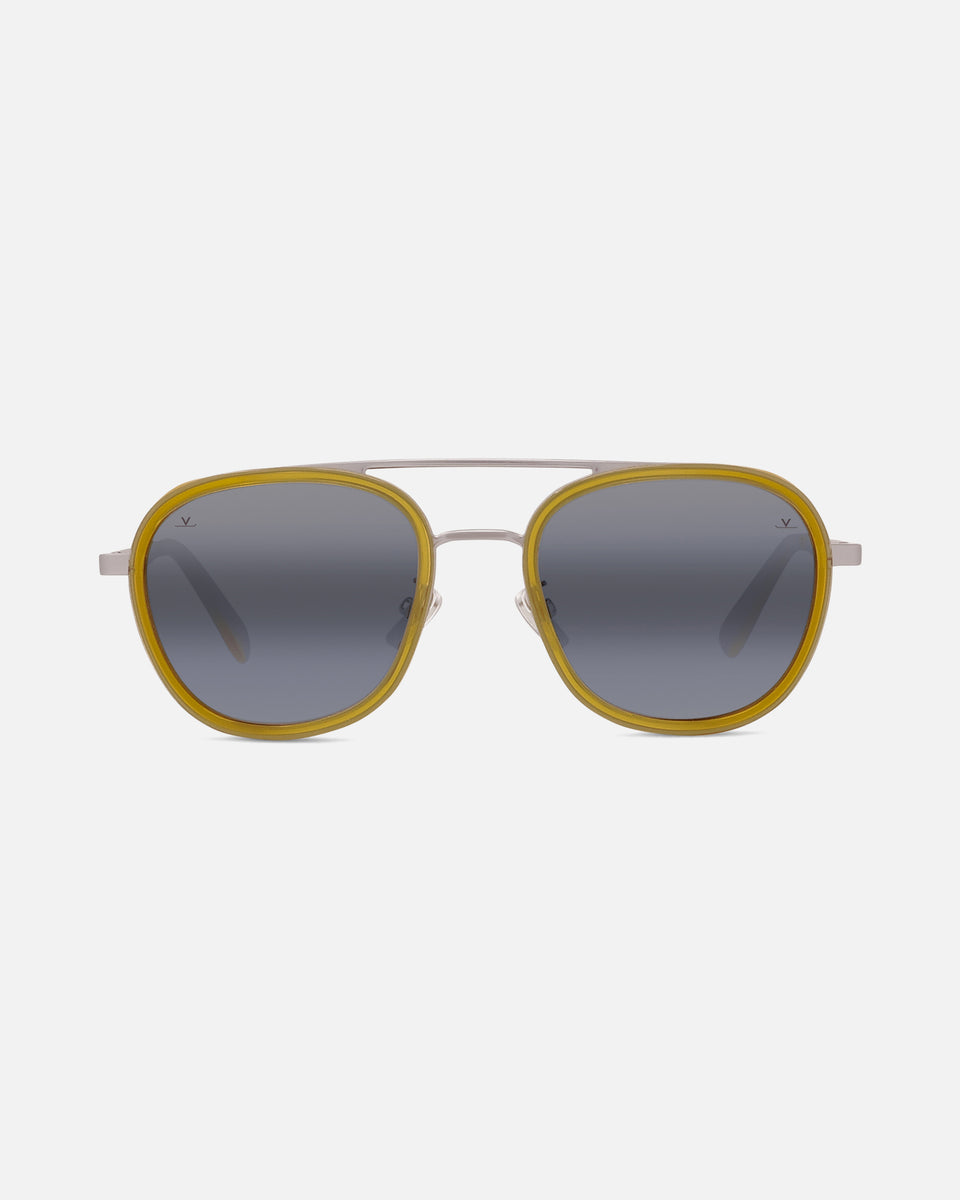
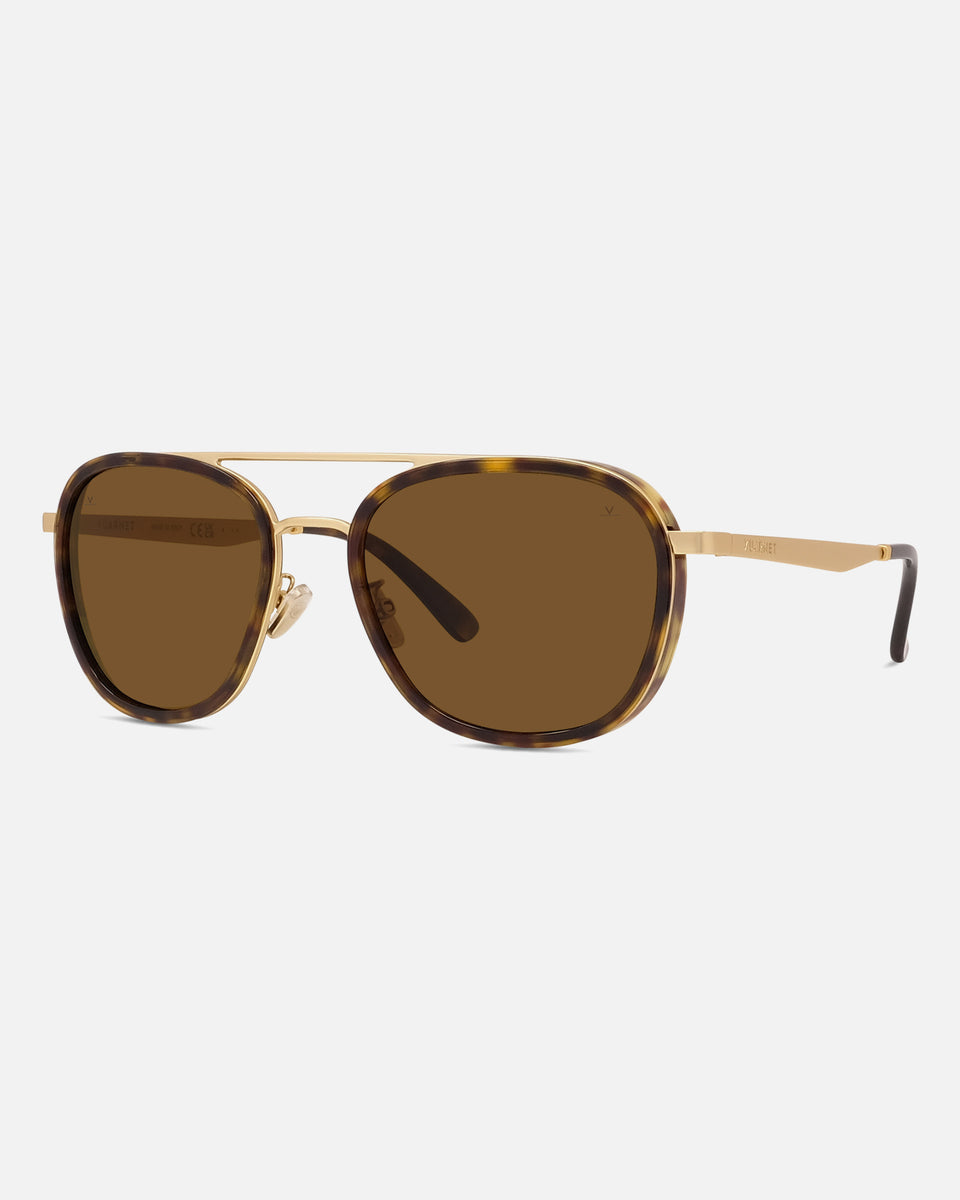
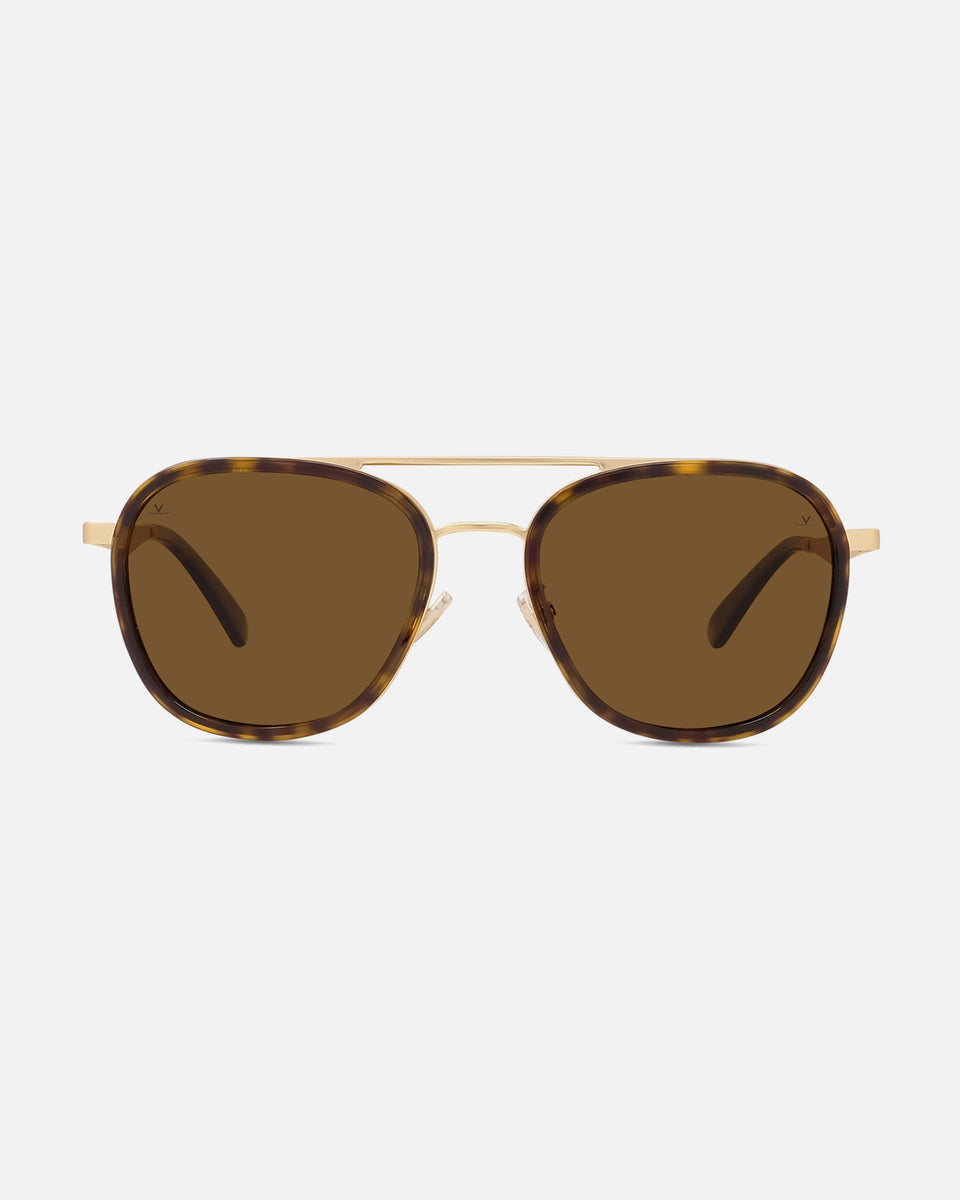
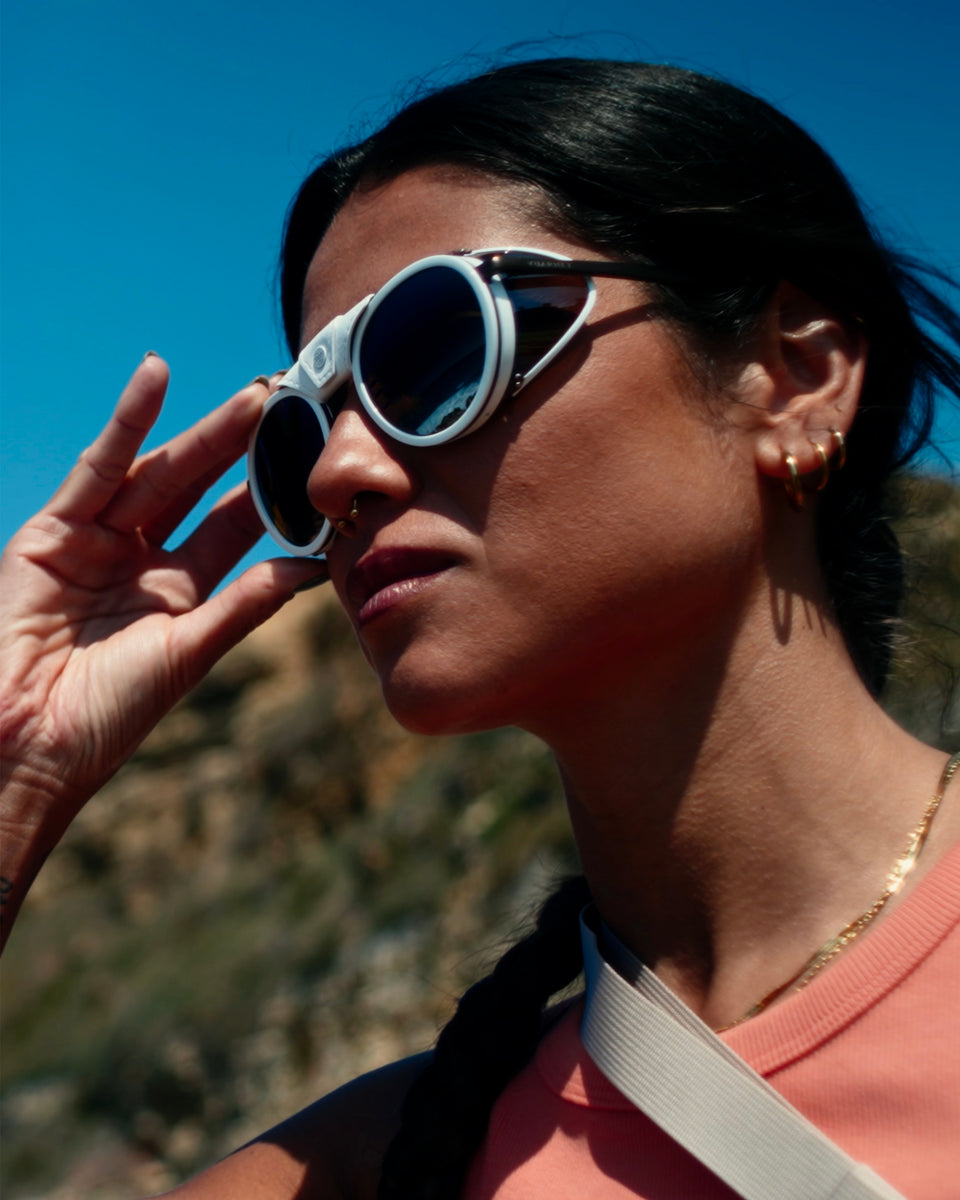
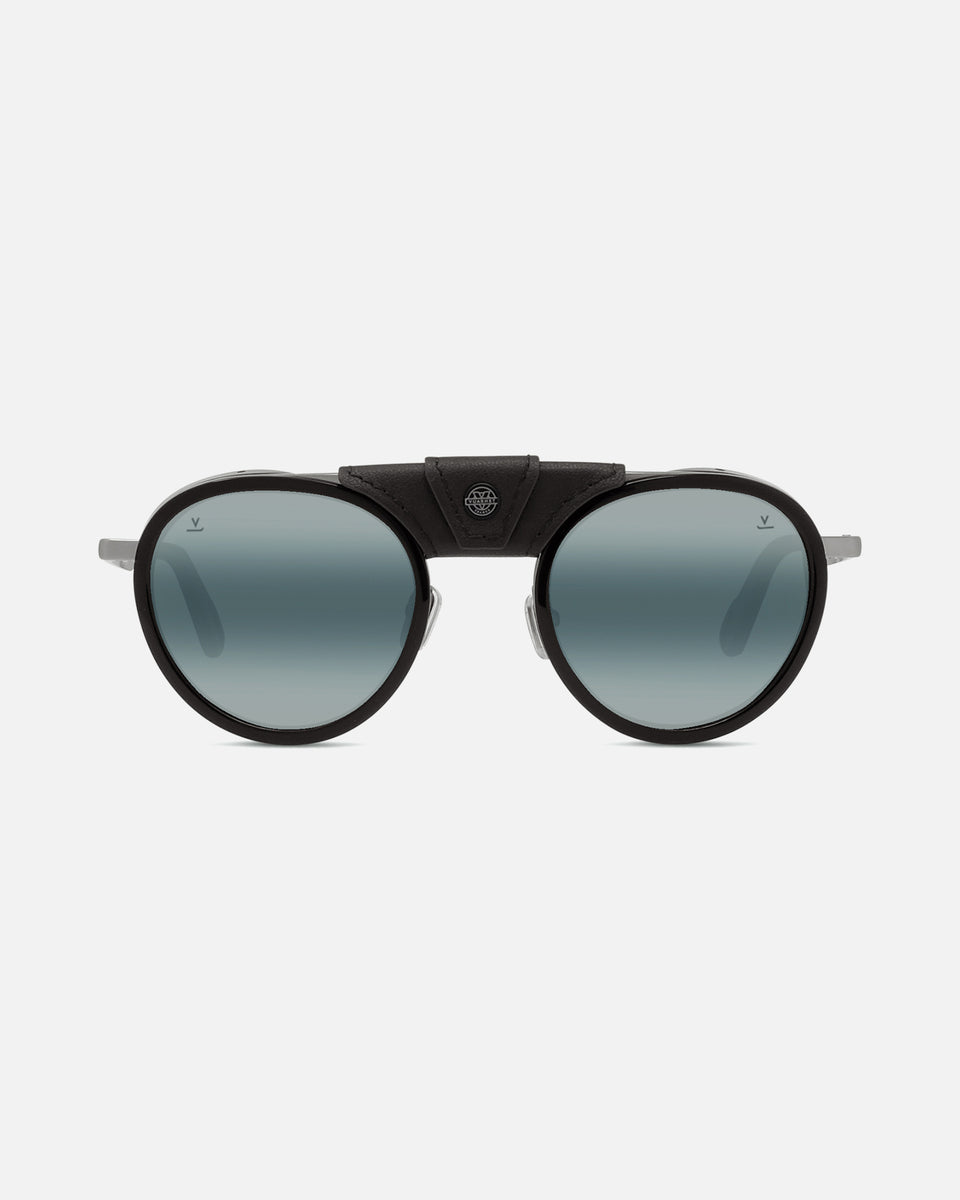
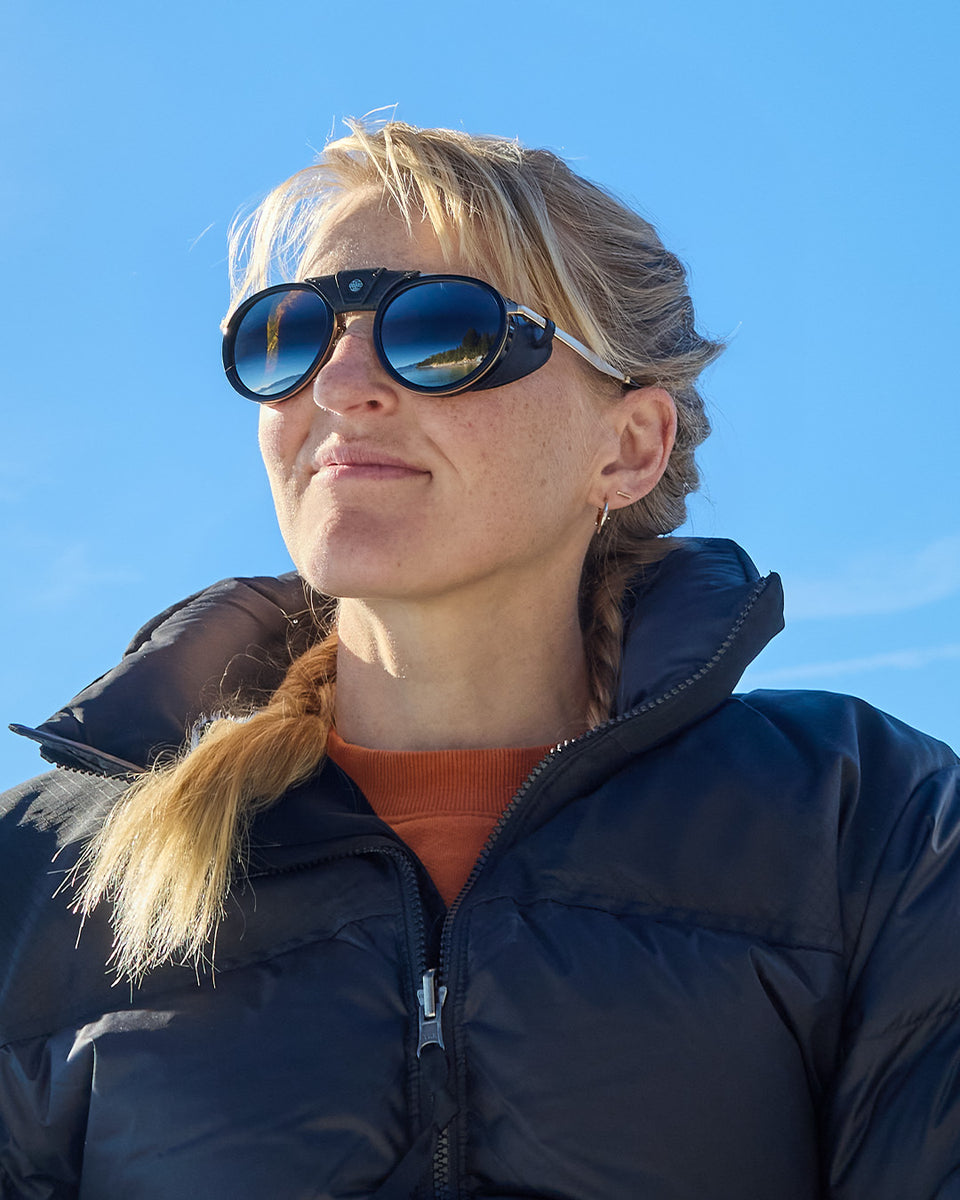
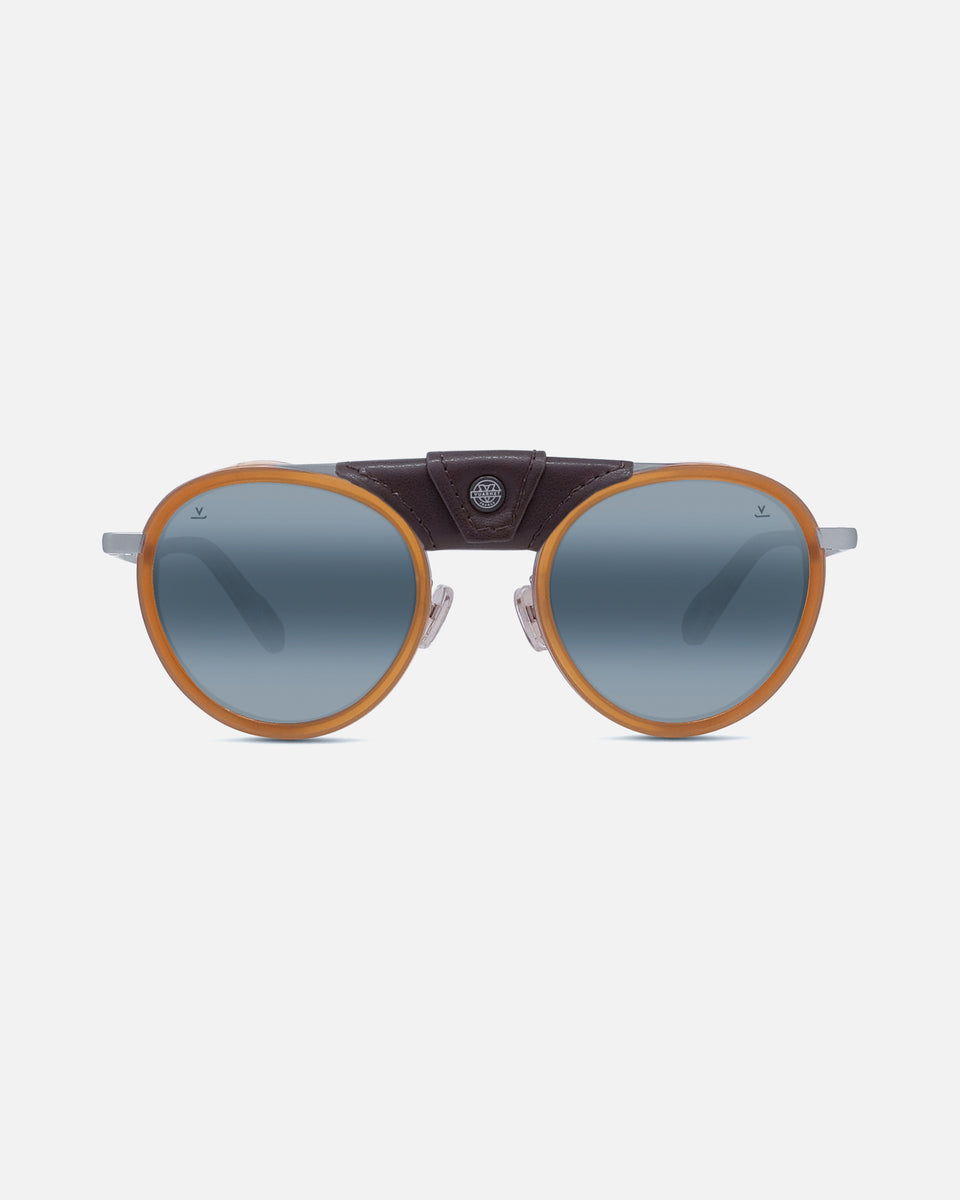
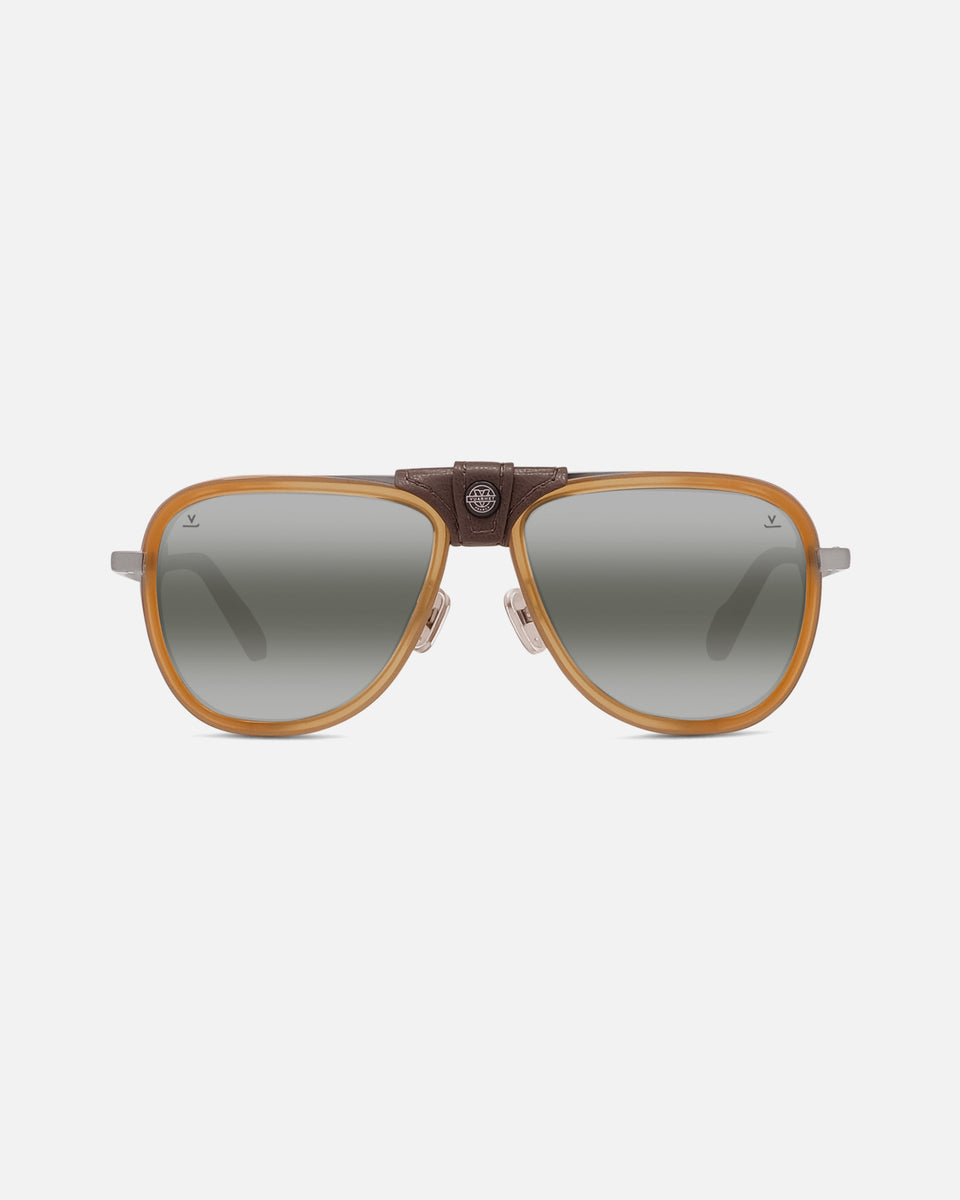
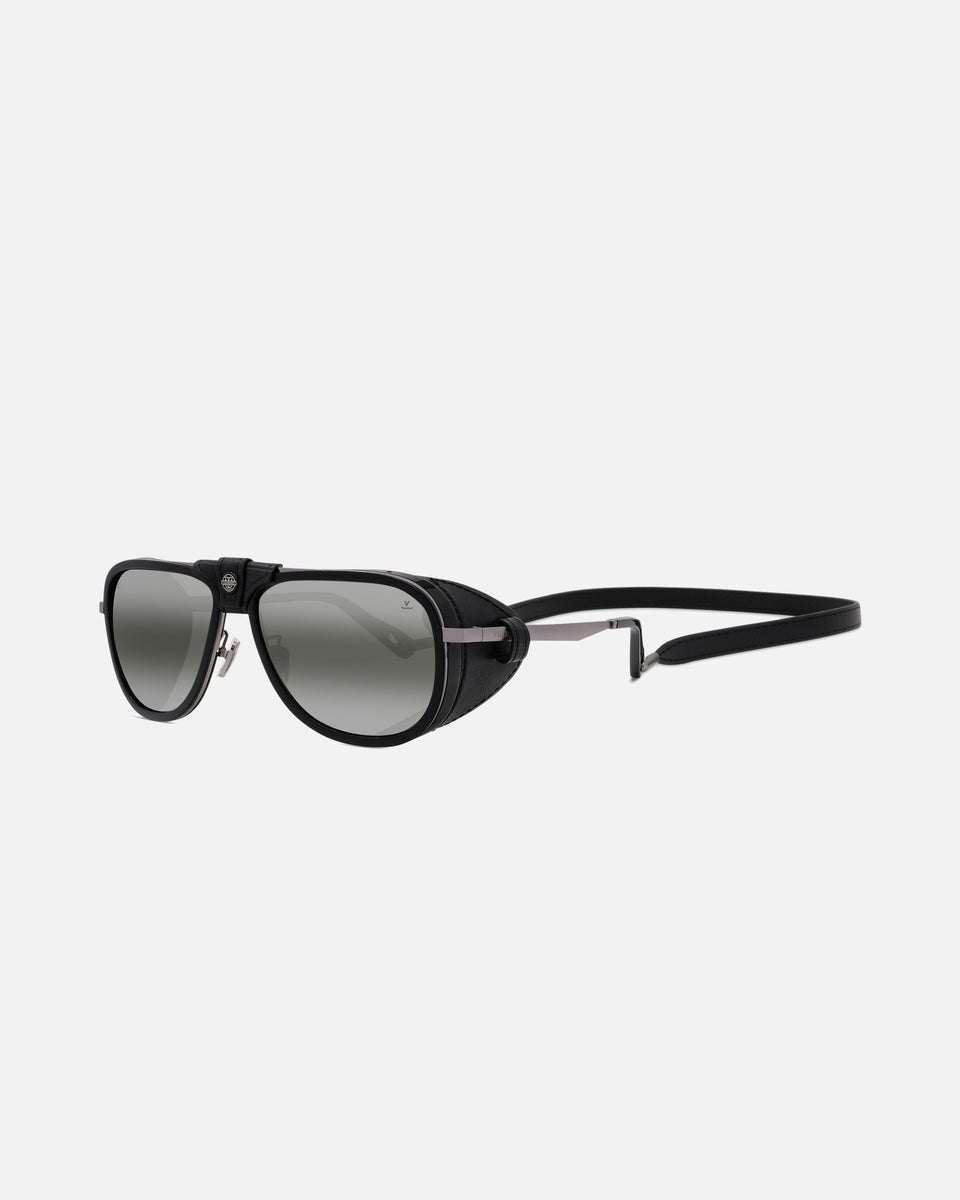
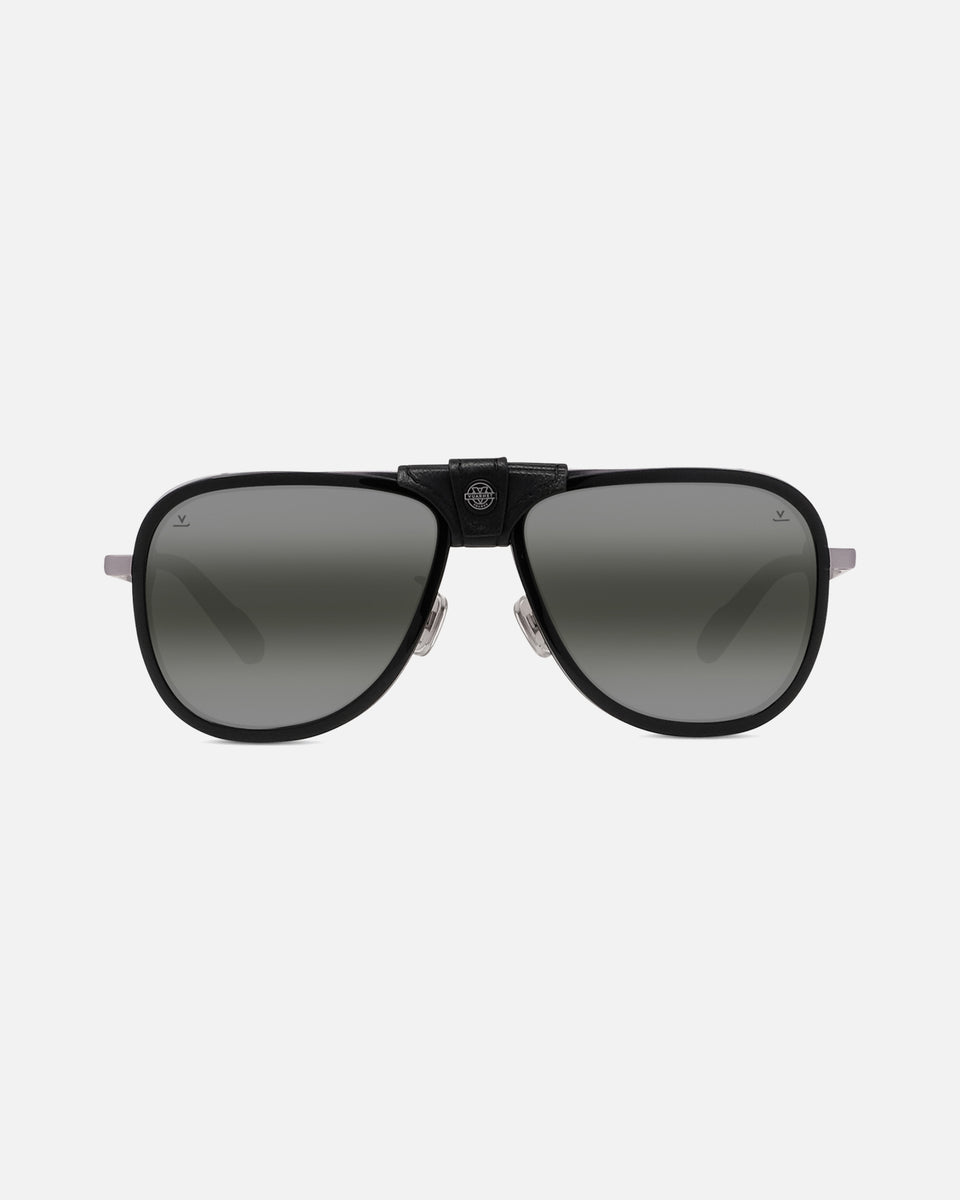
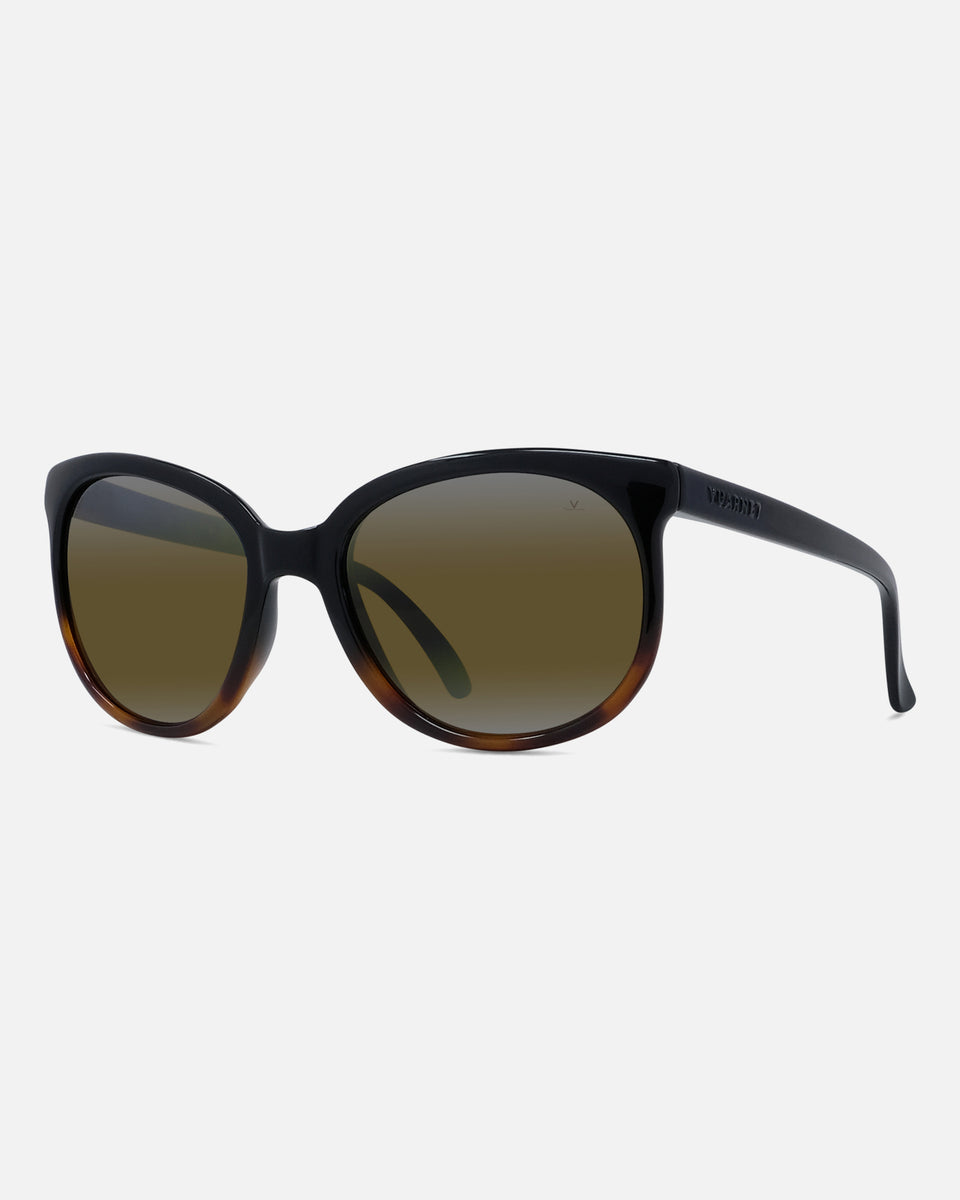
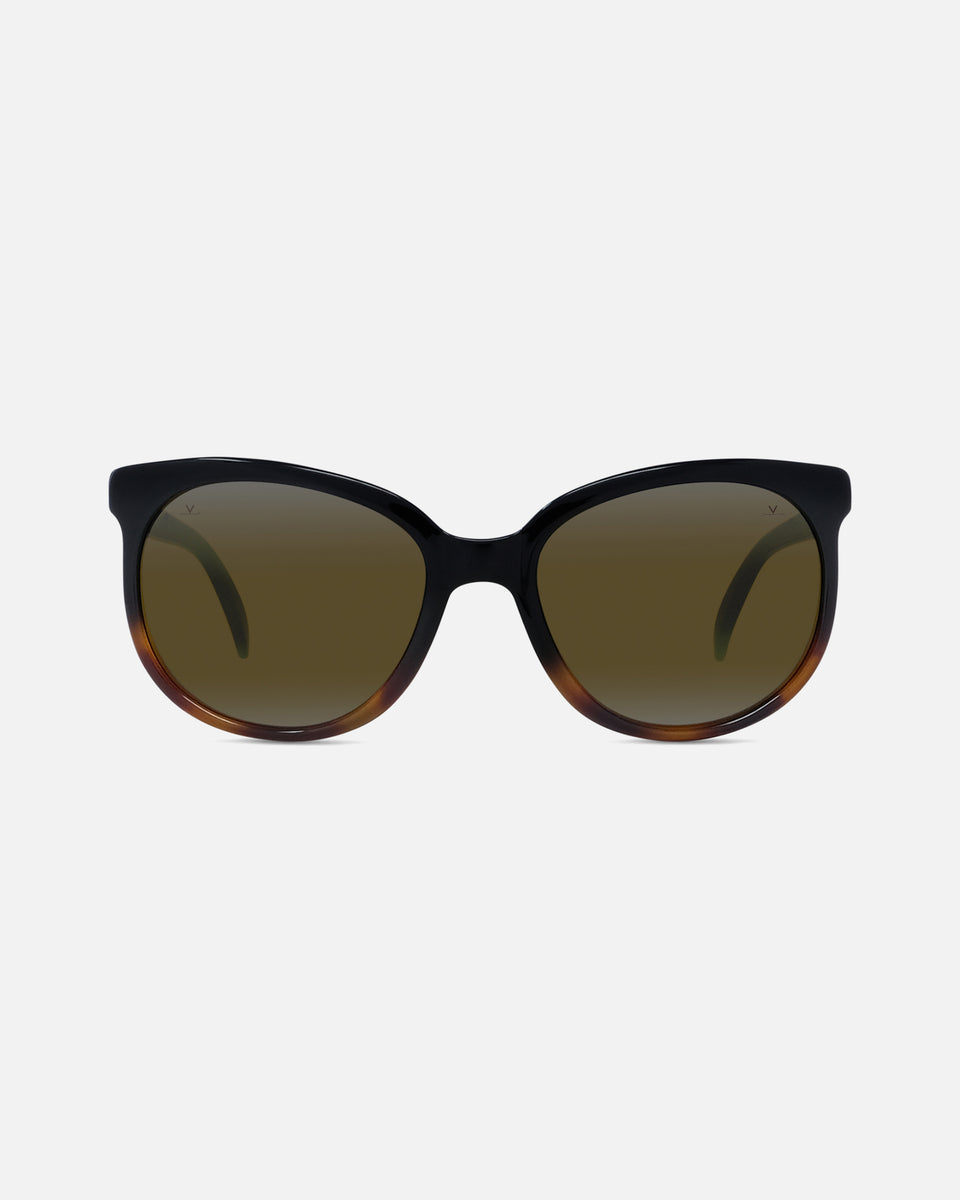
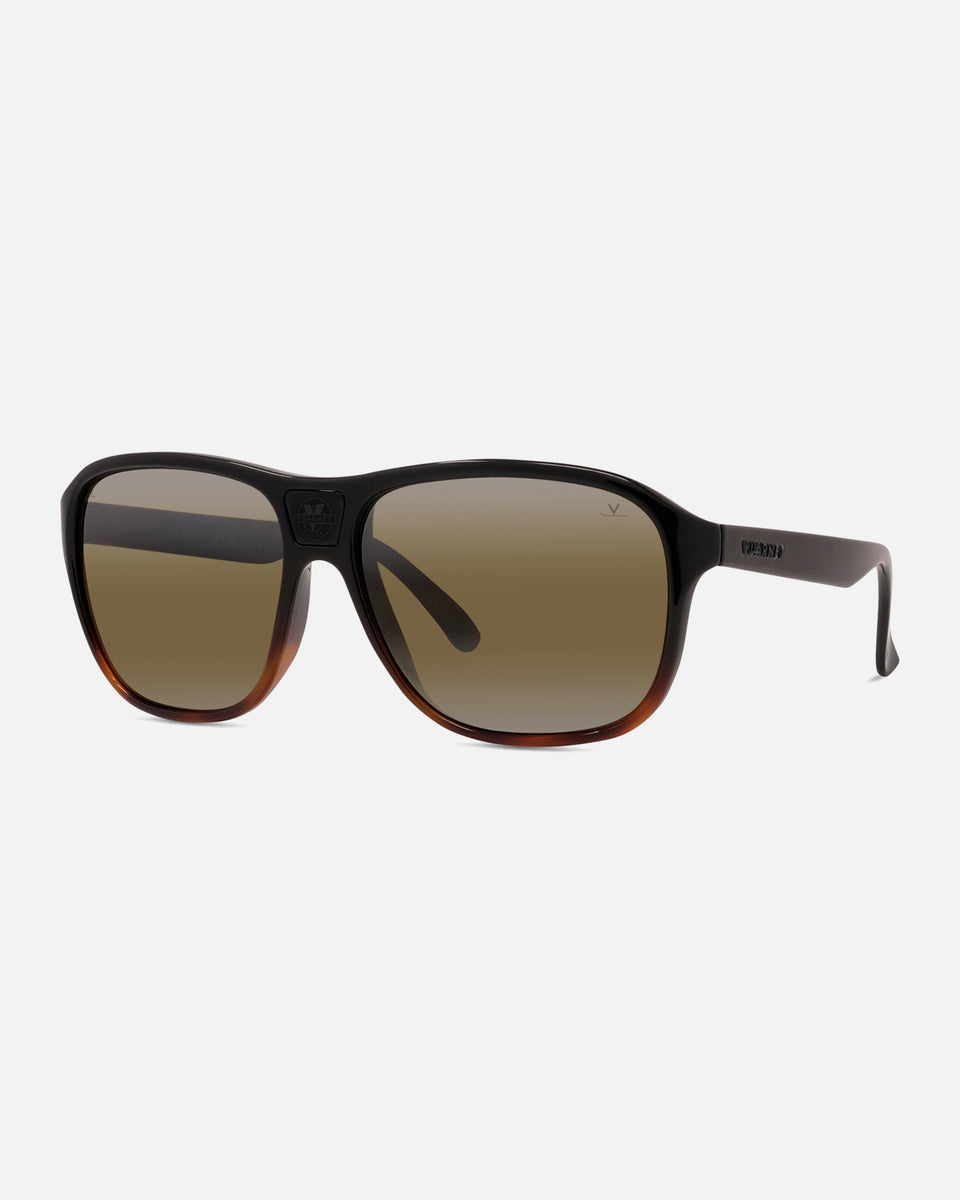
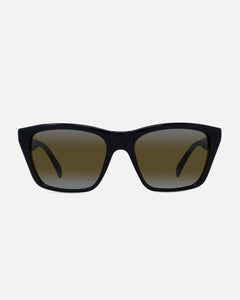
Fishing and water sports sunglasses built to see through glare
Water is one of the most demanding surfaces your eyes will face. It reflects light horizontally, straight back at you, in a concentrated band that ordinary tinted lenses simply darken rather than remove. The result is a wall of white light between you and everything you are trying to see — the seam of a current, the shadow of a fish or the buoy you are steering towards.
Vuarnet approaches this problem from the lens outward. Polarization removes reflected light. Mineral glass delivers the optical precision to read what remains. The frame exists to hold that lens securely in the right place for as long as you are on the water.
Why polarization is non-negotiable on water
Sunlight striking a flat surface becomes polarized: its waves align horizontally and reflect with far greater intensity than scattered ambient light. On open water, this creates surface glare severe enough to mask everything below the waterline.
A polarized lens contains a filter oriented to block that horizontal component while transmitting the vertical light that carries useful visual information. The reflection disappears. The water becomes more transparent.
For anglers, this is the difference between fishing blind and sight fishing. For sailors, paddlers and boaters, it is the difference between guessing at a submerged hazard and seeing it.
Lens selection for water environments
Explore the full Polarlynx™ lens range for the highest level of glare control on open water.
Fishing sunglasses: reading the water
Sight fishing depends entirely on contrast. You are looking for a shape that differs only slightly from its background, often in moving, broken light.
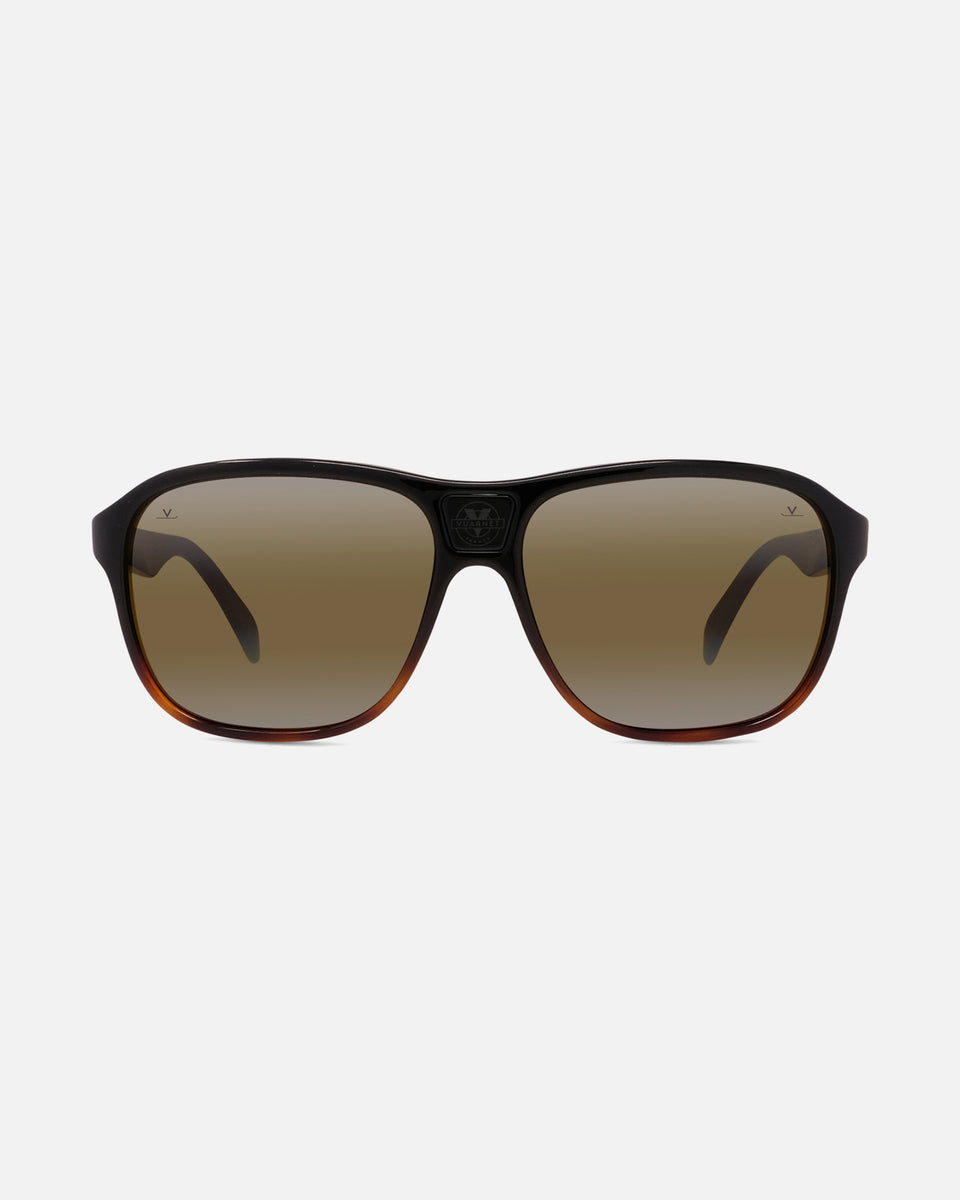
Brown and amber polarized lenses are the traditional choice for freshwater and shallow water because they separate warm tones from cool ones, lifting a fish, a weed bed or a gravel bottom out of the surrounding water. In deeper or brighter offshore conditions, blue and grey polarized lenses handle the higher light volume without distorting the scene.
What matters as much as tint is optical quality. A lens with even slight distortion forces your eyes to compensate continuously, and over a long day on the water that becomes real fatigue. Vuarnet mineral glass is ground and polished to an optical standard that plastic lenses cannot reach.
Water sports sunglasses for sailing, kayaking and paddling
Sailing, kayaking, paddleboarding and open-water swimming share a common set of demands: sustained glare, salt spray, wind and the constant possibility of a lens meeting water.
Key features to look for:
- Polarized lenses to eliminate surface reflection and reveal hazards.
- 100% UV protection against direct and water-reflected radiation.
- Wrap or curved geometry for wind and peripheral coverage.
- Secure grip temples that hold position through movement and spray.
- Compatibility with an eyewear strap or cord — see our accessories for retention on the water.
Explore the wrap-around frames collection for the most secure profiles in the range.
Salt, spray and the case for mineral glass
Marine environments degrade eyewear faster than almost any other setting. Salt is corrosive, spray dries into deposits, and gear gets handled with wet hands.
Mineral glass holds a decisive advantage here. It is naturally scratch resistant, chemically stable and unaffected by the salt and moisture that cloud and craze plastic lenses over time. Its optical clarity is the same in season five as it was on day one.
Vuarnet mineral lenses also absorb up to 94% of infrared radiation — the heat component of sunlight that contributes to dryness and eye fatigue during long exposure on reflective water. This protection is built into the glass itself, not applied as a surface coating that wears away.
Learn more in our mineral lenses guide and explore models equipped with mineral glass lenses.
Sunglasses for men and women on the water
Men’s fishing and water sports sunglasses
Men’s sunglasses in the range prioritise coverage and grip: larger lens surfaces, wrap geometry and temple designs engineered to stay put when you are moving, casting or working a boat.
Women’s fishing and water sports sunglasses
Women’s sunglasses focus on balance and fit. Lighter constructions and refined frame geometry maintain stability without pressure points across a full day of exposure.
Not sure where to start? Use our find your perfect pair tool.
Are polarized lenses ever the wrong choice on water?
Polarization is the right answer for almost every water scenario, but honesty matters more than absolutes.
- Polarized lenses can dim LCD screens — relevant if you rely on a chartplotter, fish finder or GPS display at certain viewing angles.
- In flat, calm conditions, polarization removes surface texture that some sailors use to read wind on the water.
Vuarnet also produces non-polarized mineral lenses for these situations, including Pure lenses. The choice should follow your use case, not a marketing claim.
For a full comparison, see our guide to polarized or non-polarized sunglasses.
Handcrafted in France, built to last
Every Vuarnet lens is produced in our EPV-certified manufacture in Meaux, France, through a 17-step process, and carries the engraved V that guarantees its origin and optical quality. Discover our heritage.
Frames are designed for comfort, balance and longevity, using eco-responsible materials wherever performance allows. Eyewear that survives a decade of salt water is a more sustainable choice than eyewear replaced every season.
To keep yours performing, follow our guide on how to care for your glasses.
Delivery and returns
Delivery and return options vary by country. Please consult Vuarnet’s return policy for the terms that apply to your destination.
Explore more collections
Polarized lenses — the full polarized range across lifestyle and sport
Sport sunglasses — performance eyewear for every discipline
Wrap-around frames — maximum coverage and retention
Driving — everyday and driving options
Running and cycling — endurance sport models
Vuarnet FAQ: fishing and water sports sunglasses
Are polarized sunglasses necessary for fishing?
For sight fishing, yes. Polarized lenses remove the surface reflection that hides fish, structure and depth changes. Without them, you are reading the top of the water rather than what lies beneath it.
What lens colour is best for fishing?
Brown and amber polarized lenses are generally best for freshwater and shallow sight fishing because they maximise contrast. Grey and blue polarized lenses suit brighter offshore conditions where light volume is the main challenge.
Will saltwater damage mineral glass lenses?
Mineral glass is chemically stable and resists salt exposure far better than plastic. Rinse with fresh water after use and dry with a microfibre cloth to remove deposits and protect the frame hardware.
Can I get prescription sunglasses for water sports?
Yes. Vuarnet mineral glass lenses are available in prescription through authorised Vuarnet opticians, including options suited to sport and wrap frames. Discover our prescription solutions.
Do polarized lenses affect my fish finder or chartplotter?
They can. Polarized lenses may dim or darken LCD displays at certain angles. Tilting your head usually restores visibility, but if you depend heavily on screens, a non-polarized mineral lens is worth considering.